
Why Families Are Switching to Pedal-Assist Bikes for Daily Rides
The Rise of Family-Friendly Commuting Options
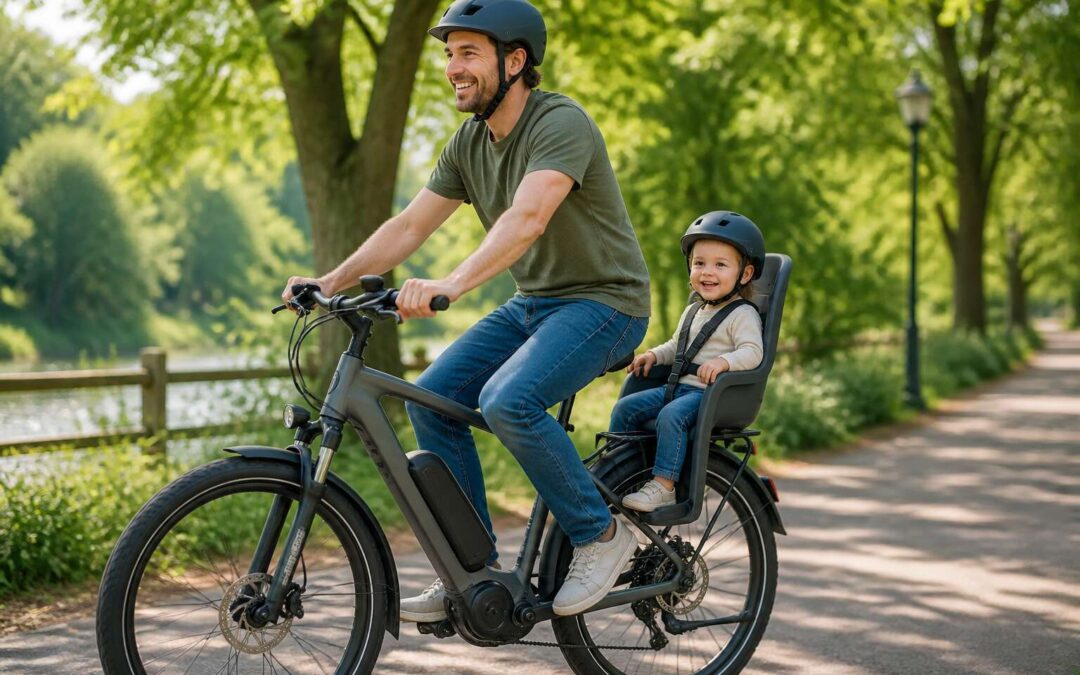
Cape Town’s morning congestion now rivals any European capital, yet more families are choosing cycle lanes over traffic. The electric bicycle with child seat turns the school run from a frantic scramble into a calm, shared moment between parent and child.
Pedal-assist deserves the credit. The motor responds to your pedalling, flattening hills and softening headwinds, so a trip to the market or the park no longer demands a fitness regime. These commuting options attract parents who never once considered themselves cyclists.
- Lower fuel bills for daily errands
- Free parking right at the gate
- Children arrive alert instead of drowsy
The expanding network of family-friendly routes across South African suburbs supports this change. An electric bicycle with child seat is not a weekend novelty; it is a dependable daily vehicle for households that value both efficiency and time together.
Environmental and Health Benefits of Shared Rides
Transport accounts for nearly 13% of a South African household’s carbon footprint, and the school run makes up a large share of that. An electric bicycle with child seat cuts this number to zero every time you choose it over the car. My own mornings shifted when I stopped feeling guilty about idling at the school gate. Now we pass the queue and use nothing but pedal power.
The physical benefits are just as concrete. A gentle pedal against the motor’s assistance still raises your heart rate. Your child gets morning sunlight and movement before sitting in a classroom! These small doses of exercise accumulate into stronger immune systems and better focus.
- Lower fuel consumption for daily errands
- Less traffic congestion near school entrances
- Deeper parent child connection through shared effort
Comparing Costs: Cargo Bikes, Car Journeys, and Public Transit
The arithmetic of the daily ride has changed. A family that once filled the tank every Monday now watches the fuel gauge with dread. Petrol prices in South Africa have turned the school run into a luxury. An electric bicycle with child seat runs on a few cents of electricity per charge.
Consider the full ledger. A car journey to school and back includes parking fees, wear on brakes and tyres, and the slow bleed of depreciation. Public transit saves the parking but costs a fare for every trip, and it rarely delivers you to the gate. The pedal-assist option skips both.
- Cargo bikes: one purchase, minimal upkeep, no fuel
- Car journeys: fuel, parking, insurance, depreciation
- Public transit: daily fares, waiting time, walking distance
Charging an electric bicycle with child seat costs less than a single bus ticket, and the bike holds its value far better than a second car.
Modern Battery and Motor Technology for Extra Payload
The morning traffic used to dictate the family schedule. Now a quiet hum replaces the engine growl. An electric bicycle with child seat glides past the stationary queue, carrying small passengers who wave at drivers stuck in their metal boxes. The switch happens for many reasons, but the technology deserves the credit.
Modern battery and motor technology for extra payload means a single charge covers the entire week of school runs. Mid-drive motors deliver steady power on steep Johannesburg ridges. Battery cells sit low in the frame, keeping the ride stable even with two children aboard.
- Torque sensors match assistance to pedal pressure
- Regenerative braking extends range on descents
- Integrated racks support up to 40 kilograms
This is why families choose the electric bicycle with child seat for daily rides. It keeps pace with life, without the noise.
Safety Considerations When Carrying a Young Passenger
Age, Weight, and Height Limits for Rear-Mounted Seats
Rear-mounted child seats demand rigorous adherence to manufacturer specifications. Most leading brands cap passenger weight at 22 kilograms, though some models stretch to 25. Height limits correspond to a child’s ability to sit upright without slumping, often around 120 centimetres. Exceeding these figures destabilises the electric bicycle with child seat, especially during emergency braking or when navigating uneven road surfaces common in South Africa.
Age recommendations usually start at 12 months, but cervical spine strength matters more than the calendar. A toddler who cannot hold their head steady without support should never ride. I have observed parents bypass these boundaries, lured by convenience. The difference between 18 and 22 kilograms may seem negligible, yet it alters braking distance and steering response dramatically. Typical thresholds for rear seats include:
- Minimum age: 12 months (or when the child can sit unsupported)
- Weight range: 9 to 22 kg depending on the model
- Height limit: shoulder line must stay below the seat back
These figures are not suggestions. The mounting bracket and frame geometry are engineered for a specific load envelope. Overstepping that envelope transforms a pleasant commute into a preventable hazard. Always verify your specific manual before assuming your child fits safely!
Helmet Requirements and Protecting Little Heads
The first time you see a small helmet wobbling behind you, you understand the stakes. When carrying a young passenger on an electric bicycle with child seat, the helmet is your child’s primary defence against the unforgiving tar of a South African road. Cervical vertebrae are still forming until age six, and a poorly fitted helmet causes more damage than none at all.
Measure the circumference of the head, not the age! The helmet must sit level, one finger’s width above the eyebrows. Straps form a V beneath the ears. If the helmet shifts more than a centimetre when you shake your head, it is too loose. I test the chin strap with two fingers; any more slack means it will fail on impact.
Key Features to Look For: Footrests, Handrails, and Straps
Your child’s world shifts with every wobble of the rear rack. On an electric bicycle with child seat, the first thing I test is the footrest. A proper model cradles the entire sole, because a dangling heel can slip into the spinning spokes on a gravel path. Handrails should sit low enough that small arms reach them without straining shoulders, yet high enough to brace during sudden stops. The strap system matters more than any cushion. Look for a five point harness with a chest clip that clicks audibly; if you can twist the webbing between your fingers, it is too loose.
I check the mounting bolts weekly. South African roads, with their tar ridges and pothole edges, loosen a rear seat faster than sealed urban streets. A rigid backrest keeps the spine aligned, and padded side bolsters prevent sideways tipping on sharp corners. Test every buckle before loading your passenger. That two second habit gives you peace no accessory can replace.
Handling and Braking Differences With Additional Weight
An electric bicycle with child seat transforms the bike’s centre of gravity. The extra mass sits high and rearward, which changes steering and stopping. Expect the front wheel to feel lighter. On loose gravel, that means less traction. The brakes require more lever pressure. Allow double the stopping distance on tar roads. Practice hard braking in an empty parking lot before carrying your passenger.
The motor’s assistance can mask the added weight when accelerating, but inertia remains. Keep the assist level moderate. Descend slowly. A loaded rear rack can also cause speed wobble at higher speeds. The sequence I follow before every trip:
- Check tyre pressure
- Test brake bite
- Tighten the seat mount
Sudden swerves are dangerous. Scan the road ahead for potholes and tar ridges.
Visibility and Rider Awareness in Urban Settings
In Johannesburg’s morning traffic, an electric bicycle with child seat places your child’s head below the beltline of most SUVs. That reality changes how a parent reads the road. The rider becomes shorter, wider, and less visible to truck drivers who sit high above the tarmac.
Visibility is a two-way contract. Bright clothing helps, but positioning matters more. A metre of clearance from parked cars prevents door collisions. Eye contact with drivers at intersections settles who moves first. The minibus taxi that cuts across a lane is a routine hazard in South African cities, not an exception.
South African urban roads demand constant scanning:
- Traffic lights dark from load shedding
- Pedestrians stepping from behind taxis
- Storm drains that catch narrow tyres
I don’t call this paranoia. It is the ordinary work of carrying a child on two wheels.
Rear Seats, Front Seats, or Integrated Frames: Choosing Your Ideal Setup
Back-Mounted Seats: Balance and Weight Distribution
Few riders realise how much a child’s weight changes the balance of an electric bicycle with child seat. Back-mounted seats place the child’s weight behind the rear axle. This shifts the centre of gravity rearward, which can make the front wheel feel light when steering at low speeds. The effect is most noticeable when starting from a standstill or climbing a steep incline.
A rear seat also adds weight to the back of the frame, affecting suspension and tyre response. You will need to check tyre pressure more often, especially on uneven roads. The extra load on the rear wheel means the motor works harder to maintain momentum.
Consider these points when fitting a back-mounted seat:
- Keep heavy items in the front basket to counterbalance the child’s weight.
- Adjust the rear shock absorber to account for the added load.
- Practice slow-speed turns in an empty parking lot before riding.
The balance of the electric bicycle with child seat depends on load distribution. I have found that a well-balanced setup makes the ride safer and more comfortable for both rider and child.
Center-Mounted Seats for Stability and Easy Access
A child’s weight belongs inside the wheelbase, not hanging off it. Center-mounted seats position the rider’s passenger directly between the handlebars and the saddle. This keeps the electric bicycle with child seat’s center of gravity low and central, preserving natural handling. On my test ride, the front wheel stayed planted during sharp turns, and braking remained predictable.
Access improves significantly! You lift the child into place without bending, and they see the road ahead, reducing their anxiety. Still, verify that small feet cannot touch the steering column.
For this setup, remember:
- Check the seat’s weight limit.
- Ensure adequate leg clearance.
This arrangement excels in urban environments where frequent stops demand stability. The electric bicycle with child seat feels composed on uneven pavement, as the load stays inside the wheelbase. That balance proves essential on South Africa’s road surfaces.
Front-Seat Options for Bonding and Interaction
Some riders choose a front seat for the connection it creates. Your child sits between your arms, close enough to hear you without shouting. On an electric bicycle with child seat up front, you can point out landmarks and answer questions in real time. That closeness changes the ride.
Front seats do alter handling. The weight sits higher and further forward than center mounts, so steering feels heavier at low speeds. You adjust quickly, but you must respect the limits. Most front models cap at 15 kilograms.
Here is what to check before buying:
- Steering clearance for the child’s legs
- Footrest position relative to the front wheel
- Handlebar interference when turning
The electric bicycle with child seat stays stable at speed, yet parking lot manoeuvres require care. On South African pavements, keep both hands on the bars. Your child sees everything, which builds confidence.
Quick-Release Systems vs. Permanent Attachments
Choosing between a quick-release system and a permanent attachment comes down to how often you ride without your child. Quick release lets you remove the seat in seconds. That matters if you use the electric bicycle with child seat for school runs but also commute alone. Permanent attachments feel more solid. They reduce wobble at higher speeds and handle South Africa’s uneven roads better.
Consider what your week looks like. If the seat stays on the bike all day, permanent hardware saves effort. If you store the bicycle in a shared garage or need to lift it onto a rack, quick release wins. The trade-offs are simple:
- Quick release is convenient, but check for rattling after a few hundred kilometres.
- Permanent mounts require tools for removal, yet they hold torque longer.
- On an electric bicycle with child seat, always verify the mount matches your frame’s tubing.
Weather Protection: Covers, Shades, and Wind Barriers
The South African sun is relentless. A rear-mounted seat on an electric bicycle with child seat benefits from a rigid canopy that shields little shoulders during afternoon heat. Wind behaves differently around the front position. A front seat places your child inside your shadow, but a clear windscreen deflects the berg wind that sneaks across the Highveld.
Integrated frames offer another route. The child sits lower, tucked into the bike’s structure. Here, a full weather pod works best. It blocks rain, dust, and the grit kicked up by Cape Town’s southeaster.
- Rear seats pair with canopy covers for sun and light drizzle.
- Front seats need low-profile wind barriers that don’t block your view.
- Integrated frames accept full enclosures without adding top-heavy bulk.
Choosing the right electric bicycle with child seat means matching the barrier to your daily route. A coastal commute calls for different protection than a bushveld trail.
Troubleshooting Installation and Fit Challenges
The Highveld’s potholes punish poor mounting. Choosing between rear seats, front seats, or integrated frames on an electric bicycle with child seat is not a fashion decision. It is a physics problem.
Rear seats amplify sway during sharp turns. Front seats alter steering geometry, making slow speed handling a fight. Integrated frames lower the load, but they complicate chainstay clearance and motor cable routing.
Installation failures typically share a pattern:
- Brackets tightened before aligning the seat hook
- Washers omitted on threaded bosses
- Strap buckles placed against the child’s back
Each mistake produces a creak, a wobble, or a premature release.
How to Select a Family E-Bike That Fits Your Range and Storage Needs
Battery Capacity and Motor Torque for Your Local Terrain
Matching an electric bicycle with child seat to your daily route requires more than a quick test ride. Battery capacity dictates how far you can carry your little one, while motor torque determines how effortlessly you climb the hills of your neighborhood.
Calculate your round trip distance and add a safety margin for detours or headwinds. Storage for the battery and charger matters too. Some models offer removable batteries that fit under a stairwell, others integrate the pack into the frame, which demands a dedicated parking spot near an outlet.
For hilly South African towns, torque is your friend. Consider these points:
- At least 60 Nm for constant gradients.
- 40 Nm may work for flat coastal routes.
- A mid-drive motor provides better weight distribution with an electric bicycle with child seat.
Check the battery’s amp hour rating, not watt hours alone. A 500 Wh pack gives roughly 50 to 70 km under pedal assist, but real range drops with a child’s weight and frequent stops.
Frame Styles That Simplify Frequent Mounting and Dismounting
A bicycle that cannot navigate your doorway will never navigate your week. Selecting an electric bicycle with child seat starts with your physical environment. A narrow hallway or basement staircase demands a removable battery and a lightweight frame. Measure your storage spot first. That measurement guides better than any specification sheet. Range shifts with a child’s load, so choose an electric bicycle with child seat that offers a spare battery.
Frame geometry determines mounting ease. Step-through options lower the top tube, letting you plant both feet while hoisting a sleepy toddler. Some models feature a front-loading rack for parents who want their child in view. Low standover heights reduce hip and knee strain during repeated stops.
Frequent mounting and dismounting demands a frame that works with your body, not against it. Step-through shapes remain the most forgiving, especially for parents carrying a child while unlocking a gate.
Integrated Racks, Kickstands, and Cargo Add-Ons
Range anxiety hits differently when you carry a child’s weight. An electric bicycle with child seat needs a battery covering extra kilograms. For South African suburbs with driveways and uneven pavements, plan for 20% more range than your daily commute. A removable battery solves storage challenges when you park in a shed or garage without power outlets.
Integrated racks change everything on an electric bicycle with child seat. They keep the child seat low and stable, reducing sway. Kickstands must be sturdy, not the flimsy side ones. Look for a double-legged stand that holds the bike upright when you strap in a wriggler.
Cargo add-ons like front baskets or rear panniers should balance the load:
- A front-mounted basket for school bags or groceries.
- A rear platform for a second seat or extra storage.
- A lockable box for helmets and snacks.
That way, your errands flow without extra trips.
Suspension and Comfort for Mixed Surfaces
Range and comfort decide whether your electric bicycle with child seat carries the family every day or stays parked. The battery must cover the school run, the grocery stop, and the return trip, plus twenty percent for detours. That extra reserve matters on windy days and uphill returns.
Suspension handles mixed surfaces. South African suburbs throw potholes, gravel driveways, and uneven pavement at every ride. A front suspension fork with adjustable preload absorbs the worst. A suspension seatpost keeps the rider comfortable without affecting the child seat mount. The right electric bicycle with child seat holds its line when the road turns rough.
When I test ride a family e-bike, I evaluate three things:
- Stability over a rough patch
- Ease of mounting with the child seat attached
- Saddle comfort after twenty minutes
The worst road you ride daily sets the standard.
Rules of the Road, Age Legislation, and Insurance Considerations
Legal Minimum Ages for Child Passengers
South Africa’s National Road Traffic Act mandates helmet use, yet it remains silent on minimum ages for child passengers. That silence means provincial traffic departments and municipal bylaws often decide the rules. Before you strap a toddler into an electric bicycle with child seat, verify your local bylaw. Many cities require children to be at least three years old, but others leave it entirely to parental discretion.
- Contact your local traffic department to confirm the legally permissible passenger age.
- Ask your insurer whether your policy covers a minor riding in such a seat.
- Review the manufacturer’s guideline, which sometimes overrides vague legislation.
Insurance considerations rarely surface until an incident occurs. A standard household policy may exclude injuries to a child transported this way. Legal protection demands that you close every loophole yourself.
Bike Lane, Path, and Road Restrictions by Region
Riding an electric bicycle with child seat means following road rules that change by province. Cape Town allows e-bikes on dedicated cycle paths; Johannesburg restricts them to arterial roads. Local bylaws dictate the specifics. Age legislation for e-bike pilots often varies, and some municipalities tie passenger eligibility to a pilot’s minimum age of 16. Insurance considerations need attention. Standard household policies may exclude injuries to a child in a carrier. You might need a supplemental rider. Regional restrictions include:
- Western Cape: cycle paths allowed, sidewalks are prohibited.
- Gauteng: e-bikes must stay off pedestrian walkways.
- KwaZulu-Natal: no clear rules for path or road use.
Legal requirements differ across regions.
Insurance Coverage and Liability Protection
Riding an electric bicycle with child seat in South Africa demands more than a steady hand. The rules of the road shift with each province. In the Western Cape, cycle paths welcome you, but sidewalks are off limits. Gauteng keeps e-bikes off pedestrian walkways entirely. KwaZulu-Natal offers no clear guidance, so you must ride defensively.
Age legislation also varies. Some municipalities require the pilot to be at least 16 before carrying a passenger. Check your local bylaws before you buckle in your little one.
Insurance considerations often get overlooked. A standard household policy may exclude injuries to a child in a carrier. You might need a supplemental rider. Consider these coverage points:
- Liability protection for third-party damage
- Medical expenses for the child passenger
- Theft or damage to the e-bike itself
Without proper coverage, a simple spill could become a financial burden. That is why every electric bicycle with child seat journey starts with paperwork, not just pedals.