
Reasons Riders Choose a Sidecar Setup
Carrying Passengers Safely and Comfortably
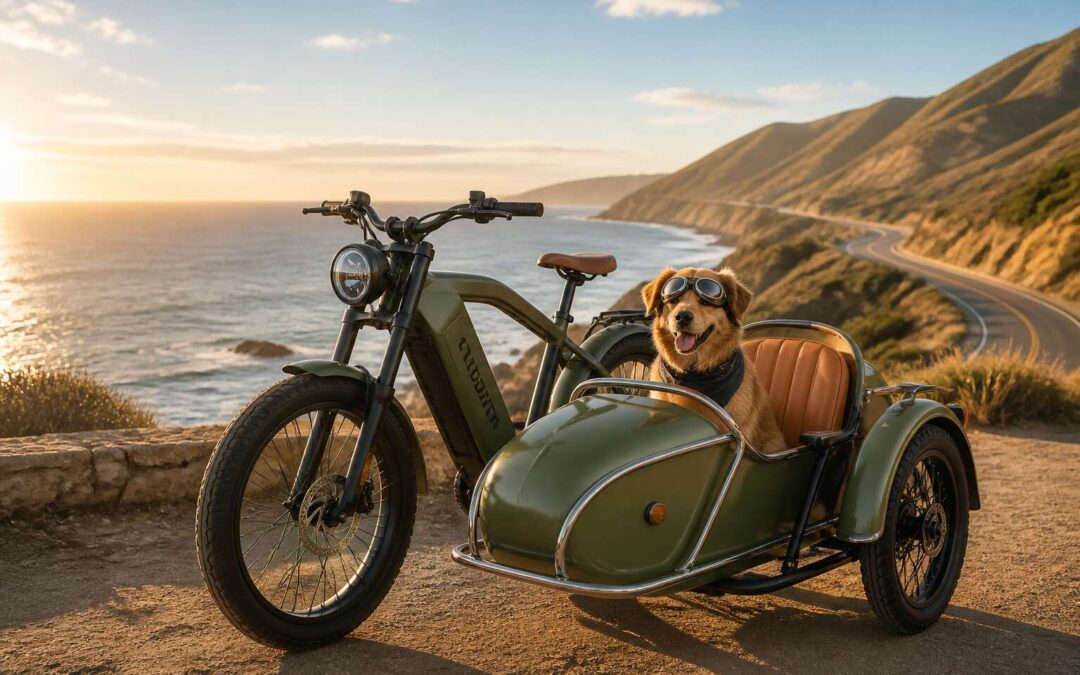
In Cape Town’s gusty seaside roads, the electric bicycle with sidecar transforms a two-up ride from an acrobatic balancing act into a civilised outing. Passengers no longer need to grip your waist or brace against every bump. They sit in a proper seat, with a windscreen and footwell, which makes conversation possible.
Riders choose this setup for three clear reasons:
- Passengers avoid the physical strain of holding on, so longer journeys feel shorter.
- The sidecar’s low centre of gravity reduces the wobble that comes from a shifting passenger.
- Children and older adults can board and alight without contorting themselves.
An electric bicycle with sidecar also handles the uneven tar of our streets with more composure, since the extra wheel absorbs the surprises. That steadiness matters when a passenger’s comfort rests on your judgement. No more white-knuckled pillion rides!
Hauling Cargo, Groceries, and Gear
An 80 litre tub changes the mathematics of the weekly shop. The electric bicycle with sidecar carries that volume without a hint of wobble, because the load sits low and between the wheels. No trailer sway, no stacked rear rack. The geometry does the work.
Cape Town riders appreciate the specificity. A flat floor keeps eggs safe from the rumble strips on Buitengracht Street. A fitted cover keeps the bread dry during the south easter. The list of uses grows quickly:
- Riders skip the parking lot entirely.
- Two full shopping bags, a school bag, and a toolbox fit at once.
- Cargo loads and unloads without contortion.
The electric bicycle with sidecar removes the strap and bungee routine from the errand. You roll up, drop the goods, and ride off. In a city where parking disappears by 08h00, that is the whole argument.
Improving Balance for Riders with Mobility Challenges
Every rider knows the moment when the front wheel wavers. For those with mobility challenges, that moment carries a heavier price. The electric bicycle with sidecar removes the gamble. A third wheel means the machine stands its ground while you mount, while you wait, while you breathe.
I have watched riders hesitate at a red light, feet scrambling for purchase. With a sidecar, that hesitation disappears. The bike holds you upright. That is not a small thing! That is the difference between riding and risking.
Stability unlocks specific freedoms:
- Stopping on a slope without panic
- Mounting and dismounting without a wall or a stranger’s arm
- Riding at walking pace through traffic without touching down
The electric bicycle with sidecar asks nothing of your legs when you stop. It simply stands, steady, while you decide what comes next. For many riders, that steadiness is the entire reason to ride at all.
Expanding Weekend Adventure Possibilities
The Cederberg calls on a Saturday morning, and the electric bicycle with sidecar answers. That third wheel changes the weekend from a route to a reverie. You can take the long dirt road to a farm stall, or chase a storm across the flats, without calculating your balance on every gravel patch. The sidecar holds your world steady while the horizon moves.
- Riding old mining trails where a two wheeler would wobble
- Pulling over anywhere for a flask of coffee, no kickstand needed
- Letting a friend join for the last stretch home, unplanned and effortless
Suddenly the Sunday is no longer a loop around familiar blocks. It becomes an expedition. The machine does not hurry. It simply gives you the freedom to wander, and that is exactly what you needed.
Reducing Carbon Footprint with a Versatile Ride
Fuel prices in South Africa climb every year, yet the daily commute stays the same. An electric bicycle with sidecar changes that relationship. The motor runs on electricity, so each trip skips the petrol stop. The third wheel turns the bike into a usable platform. I can carry a laptop bag, a toolbox, or a week’s worth of shopping without strapping anything down.
Riders choose this setup because it replaces a second car for many errands.
- Visit a client across town without hunting for parking
- Run errands in the morning and explore the coast by afternoon
- Carry a cooler or a briefcase on the same day
An electric bicycle with sidecar covers the school run, the supply pickup, and the social visit in one charge. The carbon footprint shrinks because the vehicle in the garage stays parked. It adds function to a ride you already enjoy.
Anatomy of a Sidecar-Equipped E-Bike
Frame Design and Structural Reinforcement Points
Bolting a sidecar onto an electric bicycle with sidecar turns a clean frame into a study in contorted physics. The main tube now handles asymmetric loads, so manufacturers add a gusset plate at the head tube and thicken the down tube near the bottom bracket. I once watched a poorly braced prototype wobble like a shopping trolley with a bent wheel. The sidecar attachment brackets, usually clamped at three points, transfer all passenger weight and road shock into the frame. Structural reinforcement focuses on:
- The steerer axle junction, which resists twisting forces.
- The mid-frame crossbar, which prevents flex under load.
- The rear dropout, which anchors the sidecar’s trailing arm.
Each point redistributes torque from the passenger pod. The steeper the sidecar’s rake, the more bracing you need. That vague, floppy feeling on rough tar? That is flexibility you absolutely do not want.
Sidecar Mounting Systems and Quick-Release Options
Watch someone try to secure a sidecar pod to a bicycle frame without proper mounting points, and you will see frustration. Most production sidecars for an electric bicycle with sidecar use a three point fixing system. Two brackets clamp near the bottom bracket and seat stay, while the third bolts to the rear axle. This triangular pattern stops the pod from rotating under load. Quick release levers, the same design used on wheels, let you detach the whole rig in under a minute.
- Quick release axles replace the standard rear skewer, saving time
- Mounting plates with captured nuts prevent lost hardware on bumpy roads
Some riders ask for tool free clamps on the down tube. Those work, but they need a shoulder bolt to prevent damage. In South Africa, where potholes test every bracket, use a torque wrench on the quick release cam. A loose mount makes the steering twitchy. Check the cam pressure after every hundred kilometres.
Tire Sizes and Suspension Tuning
Cycling fifty kilometres through Mpumalanga, I watched a suspension fork bottom out with a sickening clunk. That happens when you bolt a sidecar pod to a bicycle without rethinking traction. On an electric bicycle with sidecar, the front tire carries roughly twice the load it did solo. The rear tire runs lighter because the pod shifts weight forward.
For tire sizes, a 26 by 2.35 inch tire at 22 psi grips gravel, while a 28 inch road tire needs higher pressure to avoid pinch flats. Consider these pressure ranges:
- Front: 18 to 24 psi with a sidecar
- Rear: 28 to 32 psi for cargo duty
Suspension tuning starts with sag. Set the fork to 25 percent sag, then add ten percent compression damping. Every electric bicycle with sidecar needs this adjustment. The rear shock stays softer to maintain contact over corrugated roads.
Battery and Motor Positioning for Optimal Handling
Weight distribution makes or breaks every electric bicycle with sidecar, and the battery decides it. Mount the battery low inside the main triangle. That keeps steering responsive when the pod pulls to one side. A rear rack battery raises the centre of mass, which makes the front wheel feel vague on gravel.
Motor positioning follows the same logic for an electric bicycle with sidecar. A mid-drive motor at the bottom bracket balances the forward weight shift from the pod. Hub motors add unsprung mass to the rear wheel, changing braking dynamics. Torque sensing helps manage the extra load on South African roads.
Common layouts include:
- battery forward of the seat tube and low
- motor centred at the bottom bracket
- sidecar mount aligned with the drive axis
The connection point between frame and pod also influences handling. Rigid mounts transmit motor torque into the chassis. A centred battery maintains the bike’s main axis, so the pod does not pull the steering off course.
How to Select the Ideal Model for Your Lifestyle
Defining Your Primary Use Case and Terrain
Choosing the right model starts with honesty about your daily routes. Cape coastal winds, Gauteng potholes, and Karoo gravel all influence your decision! For me, the primary use case, carrying a child or hauling produce, determines the sidecar mount and frame stiffness.
Terrain dictates battery and motor size. A hilly area needs more torque and a larger battery. List your typical distances and surfaces:
- Daily kilometres
- Road conditions
- Incline steepness
A suitable electric bicycle with sidecar reflects those realities, not marketing promises.
Comparing Motor Power, Torque, and Battery Capacity
Torque moves loads, wattage moves marketing. A 250W motor with 80 Nm of torque outperforms a 500W motor with 40 Nm when hauling a sidecar up a gradient. For an electric bicycle with sidecar, the extra mass changes everything. You need sustained power, not peaks.
Battery capacity dictates your freedom. A 400Wh battery covers a flat 15km loop, but add a child and a headwind, and you will pedal home. Look for at least 500Wh for urban use, 750Wh for longer rural trips. Match the battery to your worst-case day.
- Check continuous power rating, not peak
- Demand torque above 60 Nm for sidecar loads
- Calculate range with a 20% safety margin
I learned this on a Gauteng pothole route. My first electric bicycle with sidecar had a peppy motor but weak torque. It failed on a modest incline. Choose based on terrain and cargo, not spec sheet.
Weight Capacities and Sidecar Dimensions
A sidecar that looks spacious on the showroom floor can become a liability in a Sandton parking garage. Weight capacities are the first number to interrogate. The plate rating often refers to static load, not the dynamic forces from bumps and cornering. For an electric bicycle with sidecar, the combined mass of rider, passenger, and cargo must sit well below the frame’s gross vehicle weight rating. I once saw a 90 kg rated sidecar fail at the mounting bracket after two weeks of heavy use.
Dimensions dictate daily usability. A wide bucket offers comfort but complicates narrow estate roads. A longer wheelbase improves track stability on gravel, yet turns into a headache at a traffic circle. Measure your gate, garage, and lift if you have one. South African properties often have tight entry points.
- Wheel track width versus your standard door frames
- Floor pan depth for a cooler box or school bag
- Seat belt anchor spacing for child seats
Load up a test unit with everything you plan to carry. Then check the turning radius. That reality check will save you from a regretful purchase.
Rigid Frames Versus Folding Configurations
Rigid versus folding is the first decision when choosing an electric bicycle with sidecar. A rigid frame transfers cargo forces directly through the main triangle, which suits heavy loads and gravel roads. A folding frame introduces hinge points that flex under lateral stress, so the sidecar mounting system requires more reinforcement. I have tested both configurations on Johannesburg’s uneven surfaces, and the difference in steering response is immediate.
Consider these factors before committing:
- Your storage space at home and work
- How often you will fold and unfold the bike
- The weight of the frame itself, since folding frames often add mass
A folding electric bicycle with sidecar suits commuters who take the Gautrain or use a lift. A rigid frame suits homeowners with a garage and a fixed route. Match the frame to your daily friction points.
Reading Reviews and Evaluating Test Rides
Online reviews tell you what the manufacturer wants you to see. A test ride reveals how the bike behaves. In Johannesburg, I have watched shoppers read spec sheets for an electric bicycle with sidecar, only to discover the steering feels wrong within the first hundred metres.
Online ratings reward extremes. A five star rating for battery life and a one star complaint about a loose fender look equal. Read the middle ground. Look for riders in Gauteng or the Western Cape who describe the same roads you face.
A proper test ride includes:
- Low speed turning in a tight circle
- Braking from 20 km/h with a loaded sidecar
- Climbing a steep driveway or kerb
Most dealers allow a short loop. Push beyond it! The electric bicycle with sidecar that suits your routine will hold steady when the rear wheel loses traction on wet tar, even with a partial battery.
Setting a Realistic Budget and Factoring Long-Term Costs
Many riders focus on the purchase price, yet I have found the electric bicycle with sidecar costs far more over five years than the sticker suggests. In South Africa, replacing a mid-drive motor and battery can equal half the original price. To select the ideal model, match the sidecar length to your weekly errands, not your weekend dreams. A shorter wheelbase handles tighter turns in town, while a longer platform suits gravel roads.
Set a realistic budget by separating capital from running costs. Consider these recurring expenses:
- Replacement battery after 800 cycles
- Sidecar tyre wear on hot tar
- Throttle and brake cable servicing
Factoring long-term costs means checking whether the electric bicycle with sidecar uses standard parts. Imported components add shipping delays and exchange rate pain. Choose a model with local dealer support, and you will save on freight and downtime.
Operating, Maintaining, and Staying Legal
Mastering Braking and Turning with Asymmetrical Weight
Operating an electric bicycle with sidecar demands a different braking and turning technique. The sidecar’s weight pulls the rig sideways under hard braking, so apply the rear brake first and feather the front. Countersteering is essential: press the handlebar toward the sidecar to keep the rig stable through corners. I tell every new rider to practise these movements on empty roads before carrying passengers.
Maintenance follows a rhythm that owners quickly learn:
- weekly torque checks on the sidecar mounting bolts
- monthly inspection of the sidecar tyre for flat spots
- annual greasing of the universal joint
Legality also shapes ownership. South African provinces treat this rig differently, and some require a motorcycle licence endorsement. Check the traffic regulations in your province before riding on public roads.
Performing Visual Inspections and Tire Pressure Checks
Operating an electric bicycle with sidecar begins with a five minute walk around. I check the sidecar tyre for debris, the frame welds for hairline cracks, and the passenger harness for wear. These visual checks catch problems before they become invoice sized surprises!
Tire pressure demands more attention than most owners give it. The sidecar tyre runs at a different pressure than the rear wheel. I check both when the rubber is cold, using the same gauge. A soft sidecar tyre changes the steering geometry and makes the machine pull hard to one side.
- Inspect tyre sidewalls for bulges or cuts
- Check spokes for looseness
- Verify brake cables for fraying
- Confirm the sidecar lamp works
Legality follows diligence. In South Africa, an electric bicycle with sidecar may require a motorcycle licence endorsement depending on the province. Keep a copy of the registration documents with the machine and note the renewal date on your calendar.
Lubricating Moving Parts and Checking Electrical Connections
Lubrication keeps the drivetrain honest. On an electric bicycle with sidecar, the added mass of the passenger pod loads every pivot harder than a standard two-wheeler. I use a dry lube in summer and switch to a wet lube when the Cape winter rains arrive. The chain needs attention every 300 kilometres, and the sidecar suspension arm’s grease nipples need a pump monthly.
- Pedal crank bearings
- Sidecar steering linkage
- Brake lever pivots
- Kickstand hinge
Electrical connections demand the same discipline. Corrosion at the battery terminals is the most common failure I see on an electric bicycle with sidecar. I apply dielectric grease to the connectors and check the wiring loom for chafing where it passes the sidecar mounting bracket. A loose ground wire will produce intermittent faults that mimic a dying battery. Tighten the fasteners with a spanner, not pliers, and inspect the harness grommets for cracks.
Understanding Local Traffic Laws and Requirements
Operating an electric bicycle with sidecar along the Cape Peninsula demands patience. The extra width forces you to claim the full lane, and crosswinds from the Atlantic push the passenger pod harder than you expect. I check the sidecar tyre pressure before every ride, because uneven wear will steer you toward the gutter.
South African traffic law treats your rig as a category of its own. The classification depends on motor wattage and top speed, so an electric bicycle with sidecar might legally count as a motor vehicle in one municipality and a pedal cycle in another. Provincial bylaws diverge. What the Western Cape accepts on its cycle lanes may be prohibited in Johannesburg.
The paperwork requires attention.
- Licence endorsement for high wattage motors
- Helmet compliance rules
- Vehicle registration depending on classification
Traffic officers interpret these rules unevenly. I carry the relevant municipal notices in my saddlebag for resolving roadside disputes.
Choosing Insurance and Security Options
Operating an electric bicycle with sidecar demands insurance that covers both mechanical failure and third-party liability. My own policy required a separate rider for the passenger pod. Without it, a minor sideswipe in Sea Point would have left me exposed.
Maintaining your rig also keeps insurance valid. I document every tyre rotation and brake pad replacement. Insurers deny claims when neglect contributes to an accident. Security matters too. Theft rates for cargo bikes and sidecar rigs in Joburg have pushed premiums higher.
- Track serial numbers for the frame and motor
- Install a GPS tracker on the rear rack
- Use a hardened chain lock through the chassis
Staying legal means securing the right cover before you ride. Some municipalities require proof of insurance to park in designated zones. I carry my underwriter’s certificate alongside the municipality notices. That combination prevents disputes and keeps the electric bicycle with sidecar where I left it.