
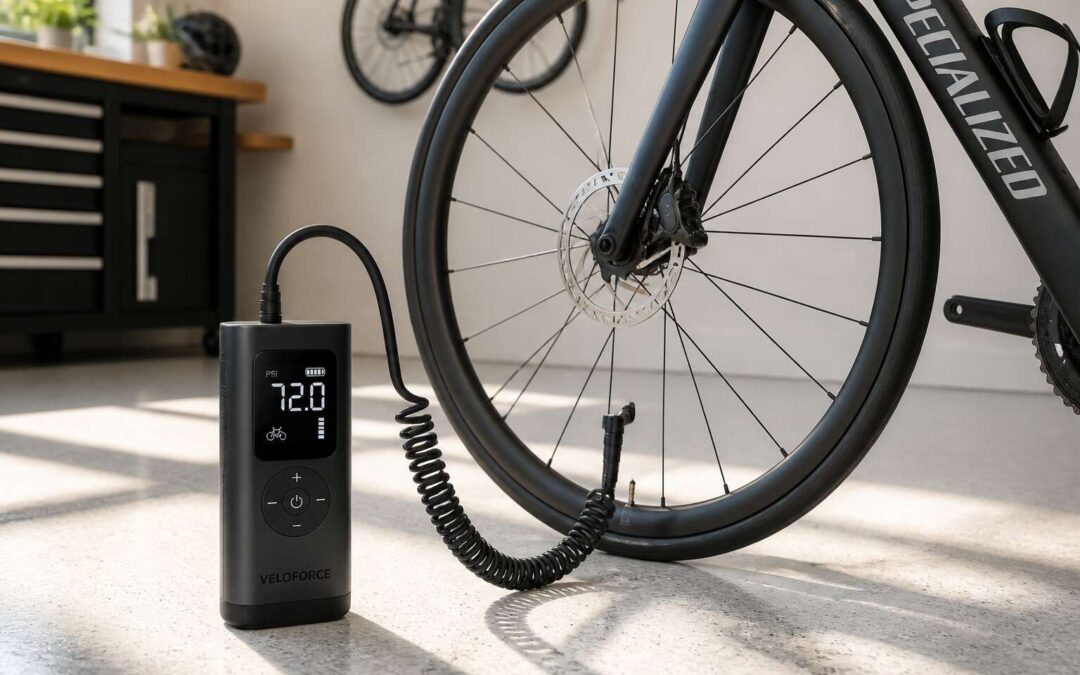
Understanding Electric Bicycle Tire Pumps
How They Differ from Manual Pumps
Fixing a flat tyre with a manual pump can take fifteen minutes of strenuous effort. An electric bicycle tire pump cuts that down to under two minutes. The difference is not just speed. It is about how the tool engages with the valve. Manual pumps demand physical strokes, which vary in pressure. Electric models use a motor and gauge to deliver consistent air. For South African commuters on uneven roads, this consistency matters. A manual pump might struggle to seat a tubeless tyre. An electric bicycle tire pump handles it smoothly.
- Pressure accuracy is automatic
- Effort is minimal
- Time spent is halved
Manual pumps also require you to crouch and bend. Electric versions let you stand, attach the hose, and wait. The power source differs too. Most run off a rechargeable battery. That adds weight but removes strain.
Key Components and Technology
It would surprise few commuters to learn that a bicycle pump is a simple cylinder. But the modern electric bicycle tire pump is a different machine entirely, one that hides its complexity in a small, rugged body. Under the casing sits a small DC motor, a gear assembly, and a piston. This unit does the physical lifting that your arms would normally do. The motor turns a crank, which pushes the piston to compress air. That air travels through a sealed hose to your tyre valve. The efficiency of this system is what allows a flat to be filled in two minutes without breaking a sweat.
The real intelligence comes from the pressure management. A digital pressure sensor, often a piezoresistive type, monitors the air in the tyre in real time. This sensor sends data to a small circuit board, which cuts power to the motor once the target pressure is reached. This is a closed loop system. You set the desired PSI, and the pump self corrects for temperature changes and volume loss. This accuracy is vital for the high pressures used on road bikes, where a few PSI can change the ride quality significantly.
Beyond the motor and sensor, the power source defines the usability. These pumps run on lithium ion cells, similar to those in your phone.
– The battery capacity dictates how many tyres you can fill on one charge. Two to four full fills is common.
– A USB C charging port allows for a quick top up from a laptop or power bank.
– The display shows the target and current pressure simultaneously, so you can watch the filling process without guessing.
The final piece is the valve connector. A smart chuck seals directly to the valve stem, which prevents air loss during removal. This is a mechanical advancement over the simple clip of a manual pump. When you consider the vibration on South African roads, a solid electrical connection and a precise sensor are not luxuries. They are the difference between a tool that works and a gadget that disappoints. The casing also matters. A durable ABS plastic shell protects the internals from dust and minor drops, which are common when you fix a tyre on the roadside in the Karoo or the suburbs of Johannesburg. This is a tool built for the harsh reality of daily commuting, not for a garage shelf.
Battery Life and Charging Considerations
An electric bicycle tire pump is only as useful as its battery. A single charge typically handles two to four full tyre fills, but that number drops when you run a high-pressure road bike at 100 PSI. The motor draws more current, so the effective capacity feels smaller than the spec sheet suggests.
Charging through USB C is simple, but load shedding makes timing a factor. I keep a 10,000 mAh power bank in my saddlebag; it can top up the pump several times over. Cold mornings and frequent use both reduce the practical range. A dead battery is not a mechanical failure, it is a planning failure!
Pay attention to how the display behaves when the battery nears empty. The pressure reading becomes unreliable, which can leave you underinflated. That is why I always charge after every second fill, not when the indicator turns red.
Portability and Design Factors
In South Africa, the road surface often has opinions. That makes a compact electric bicycle tire pump a matter of strategy, not convenience. A unit with a 200 gram body and a flip out valve adapter fits inside a jersey pocket. Larger models with a built in pressure gauge and LED screen look attractive until you need to carry them up a mountain pass.
- Valve head quality: a brass core that locks onto Presta or Schrader without adapters saves ten minutes of roadside fumbling.
- Mounting hardware: a bracket that attaches to the bottle cage bolts keeps the pump stable, while rubber straps snap at 70 km/h.
- Weight distribution: a pump slung under the top tube stays invisible, but one rattling in a rear pannier drives you mad.
The strongest electric bicycle tire pump is useless if it lives in the garage. A soft touch button, water resistant casing, and a simple pressure release valve matter more than the specs.
Choosing the Right Electric Pump for Your Needs
Essential Features to Prioritize
Most pump failures are not mechanical faults but mismatched expectations. A powerful motor cannot compensate for an inaccurate gauge, and the finest electric bicycle tire pump becomes a liability when its pressure sensor drifts by five psi. Tubeless tyres demand precision; mountain bikers riding Highveld gravel know this intimately.
Essential features to prioritise include:
- Digital pressure readouts with tenth-psi resolution.
- Automatic shutoff that halts inflation at the target pressure.
- Dual valve heads (Presta and Schrader) with threaded cores.
Consider also the pump’s duty cycle. Some units overheat after three minutes of continuous running, leaving you stranded beside a farm road. A pump that cycles cool and restarts promptly will serve you longer than one with a glossy case.
Compatibility with Valve Types (Presta, Schrader, Dunlop)
Schrader valves greet you at every petrol station, but your road bike likely speaks Presta. And somewhere in a forgotten shed, a Dunlop valve waits to confound the unprepared. Valve compatibility is the quiet gatekeeper of a smooth ride. An electric bicycle tire pump that forces you to carry adapters defeats the purpose of convenience. Choose a pump with a universal head that locks onto all three standards without fumbling.
Here is what to check:
- Presta: narrow and threaded, requiring the locknut loosened first.
- Schrader: the automotive standard, robust and dependable.
- Dunlop: found on older European models and some local commuters.
A head that handles all three means you can help a stranded cyclist without a moment’s hesitation. That is the quiet superpower of a well chosen electric bicycle tire pump.
Pump Speed and Inflation Efficiency
Most manual pumps waste your effort. An electric bicycle tire pump is a different machine entirely. The motor does the hard work, but only if it is the right motor. You need to judge the power by the PSI rating and the wattage, not by the flash of the casing. A pump that crawls to 80 PSI will test your patience. Another that reaches 120 PSI in under two minutes is worth the weight on your frame.
You must also consider the difference between peak and sustained output. Some motors surge at the start, then fade. They feel fast when the battery is fresh. That impression vanishes on a cold morning in Johannesburg, when the tyre is almost flat and the battery is low. The sustained output is what matters. It is the true measure of inflation efficiency.
The sound of the pump tells a story. A straining, high-pitched whine means the motor is struggling against the resistance. A steady, low hum means it is working within its limits. That hum is the sound of a reliable tool. For long rides on uneven tar, through potholes and gravel, that reliability becomes everything. I have learned to trust the steady hum over the promotional numbers on the box.
Here is what separates a good pump from a great one:
– A duty cycle that allows for continuous inflation without a cooling-off period.
– An automatic shutoff that reads the pressure accurately, not just a timer.
– A digital gauge that updates in real time, preventing over-inflation.
These features determine whether your electric bicycle tire pump is a daily companion or a occasional frustration. The speed is useful, but the consistency of that speed is what gets you back on the road. A pump that finishes the job without drama, every single time, is the one you will reach for first. The high-volume setting for a tubeless tyre and the high-pressure setting for a road tyre, both delivered with precision, is the complete package.
Budget-Friendly vs. Premium Models
Choosing between a budget friendly and a premium electric bicycle tire pump comes down to how often you actually use it. The cheaper model will inflate a tyre, but it labours on the second or third fill, especially when the afternoon heat is against you. I have watched budget units slow to a crawl before the valve is even secured. The premium unit performs the same task without drama, every time.
A budget electric bicycle tire pump suits the weekend rider with a single bike. The premium model earns its price for the commuter who relies on the machine daily.
- The budget unit is a backup device.
- The premium unit is part of your riding kit.
Your money buys reliability, not speed alone. Decide what your morning depends on.
Reading Reviews and Comparing Brands
In South Africa, the right electric bicycle tire pump is the one that survives the reality of your commute, not the one with the best product photography. Reading reviews demands attention to local conditions, such as how the pump behaves after months of dust and intermittent power.
When comparing brands, look past the marketing gloss. I always check whether the review mentions the valve fitting under tension, or the time taken to reach 80 psi on a 700c tyre. Those details reveal more than star ratings!
Consider these signals when reading reviews:
- Consistency across dry and humid months
- Response from the brand to complaints
- Replacement battery availability in South Africa
The electric bicycle tire pump that earns its place in your bag is the one that performs quietly for a year, not once for a reviewer.
Practical Usage and Inflation Techniques
Step-by-Step Inflation Process
According to a cycling survey, nearly 40% of riders have aborted a trip due to a flat tire. With an electric bicycle tire pump, that stat becomes irrelevant! Let me walk you through the practical steps I use every time.
- Attach the pump head to the valve, ensuring a click or tight fit.
- Input the target pressure from your tire’s sidewall.
- Start the motor and let it run uninterrupted.
- Watch the digital gauge, and stop precisely at the desired PSI.
- Detach the head and quickly screw on the valve cap.
Remember to keep your electric bicycle tire pump upright. Tilting it can cause false readings and strain the internal sensor. Also, always double-check the valve type before attaching. A mismatched head wastes precious battery and time. Give the hose a gentle tug before you start, just to confirm the seal. After two rides, this sequence becomes muscle memory.
Achieving Optimal PSI for Different Tire Types
South African roads punish the complacent rider. Heat softens rubber, potholes test rims, and a wrongly inflated tyre does more damage than a snakebite pinch flat. I have watched seasoned cyclists abandon a weekend route over a pressure difference you cannot see by eye. The electric bicycle tire pump removes that guesswork, but only if you respect the numbers on the sidewall.
Road tyres demand high pressure, often 90 to 110 PSI, for speed. Mountain bike tyres thrive at 28 to 40 PSI for grip on loose gravel. Hybrid tyres sit between 50 and 70 PSI. The sidewall rating is the starting point. Temperature swings in Cape Town or Johannesburg can shift the target by several PSI, and an electric bicycle tire pump lets you adjust mid-ride without grunting through a manual lever. The digital readout protects you from over-inflation, which blows tyres off rims in severe heat.
Troubleshooting Common Inflation Issues
The electric bicycle tire pump is a tool for precision, but precision demands a steady hand and a clear head. I have seen riders chase a reading on the digital gauge, twisting the hose connector at awkward angles, fighting the valve stem as if the pump were a stubborn mule. The technique is simpler than that. Stabilise the pump on the ground or against your frame before engaging the chuck. A firm, perpendicular push onto the valve removes the wobble that causes air loss.
Troubleshooting usually starts with a hiss. A leaking connection means the chuck is not seated correctly, or the valve core is loose. For Presta valves, unscrew the locking nut one full turn and press the chuck on until it clicks. For Schrader, the fit should be snug but not forced. Listen for the leak, then reposition. The pump’s battery can also behave oddly in extreme cold, so store it above 10°C when possible.
- Check the valve core with a small tool if pressure readings fluctuate.
- Inspect the hose O-ring for cracks after dusty rides.
- Run the pump for two seconds without attaching it to clear debris.
Heat is the silent enemy. A tyre inflated to 100 PSI at noon in Pretoria will rise past 105 PSI on the tarmac. The electric bicycle tire pump’s gauge is accurate, but it measures at the moment of inflation, not during the ride. If the pump cuts out early or the motor labours, the filter might be blocked with fine Karoo dust. Clean the intake vents regularly and keep the unit upright.
Safety Precautions During Operation
On a corrugated gravel road, an electric bicycle tire pump that slips from your hand becomes a liability. Practical usage demands a stable stance. Place the unit on flat ground, keep the hose straight, and seat the chuck firmly onto the valve. A slight pull on the hose after connection confirms a good seal. During cycling, the gauge updates in real time, so you can stop the moment the target PSI appears. Do not walk away while it runs; a sudden spike on a hot tar road can surprise you.
Safety precautions during operation begin with common sense. Keep your fingers clear of the valve head when releasing pressure. Never run the pump continuously for more than two minutes without a cooldown period. If the motor feels sluggish, check for debris in the intake vents.
- Always verify the tyre’s maximum pressure before starting.
- Keep the unit upright to avoid fuel or lubricant leaks.
- Listen for changes in motor sound; they indicate strain.
These small habits extend the life of your equipment and prevent mishaps on remote gravel routes.
Using the Pump for Other Inflatables (Balls, Pool Toys)
An electric bicycle tire pump earns its space in the boot long after the tyres are done. It inflates a soccer ball or a pool toy in seconds, which matters when a weekend match starts and the nearest petrol station is kilometres away.
The technique differs from tyre inflation. Fit the ball needle adapter, then dial the pressure to a low PSI, typically 8 to 12. Press the chuck onto the valve and listen. The motor note changes as the item fills. Stop the moment the surface feels taut.
- Set the target pressure before switching on.
- Use short bursts for thin PVC pool toys.
- Release air quickly by pressing the valve pin, never the pump head.
That digital readout on the electric bicycle tire pump is your best guard against overinflation. A beach ball can burst at 15 PSI, so trust the gauge, not your guess.
Maintenance and Longevity of Your Electric Pump
Cleaning and Storage Best Practices
An electric bicycle tire pump endures dust, grit, and the occasional knock against a garage wall. Keep the housing clean with a soft cloth and mild soap, and never let water enter the valve connection or display. The internal motor draws air through vents, so a blocked intake quietly reduces performance.
Storage matters just as much. The rechargeable battery degrades fastest when left at full charge in heat, so store the unit at around 50 percent capacity in a cool, dry place. If you ride near the coast, salt air can corrode exposed terminals; wipe them periodically.
A few maintenance checks keep the pump dependable:
- Inspect the hose and chuck for cracks before each ride.
- Blow out the vent slots with canned air every few months.
- Keep the carry bag or case closed to limit dust build-up.
This routine takes minutes and adds years.
Battery Replacement and Care Tips
The lithium cells inside your electric bicycle tire pump will not last forever, and that is a simple fact of chemistry. Most units deliver between 300 and 500 charge cycles before capacity drops noticeably. When your pump starts wheezing on a 60 PSI road tyre, or the gauge flickers under load, the battery is likely past its prime.
Replacing the cell is often cheaper than buying a whole new unit. Open the housing with the correct screwdriver and inspect the battery pack for swelling or corrosion. Order a replacement with the identical voltage and connector type. Avoid generic packs with mismatched polarity, they can damage the motor controller.
Care extends the interval between replacements. Do not drain the battery to zero before charging, partial cycles are kinder. Store the pump at 40 percent charge if you ride infrequently. Heat is the real killer, so keep the unit out of direct sunlight and the car boot in summer. The Highveld sun can cook a battery in an afternoon.
If the pump has a removable cell, keep a spare charged and rotate them monthly. A battery that feels warm during charging is a warning sign. Stop the charge and let it cool. The lifespan of your electric bicycle tire pump depends on these small habits more than any other factor. When disposal time comes, take the old pack to a recycling centre, not the bin.
Firmware Updates and Smart Features
Beneath the housing of your electric bicycle tire pump lies a quieter kind of maintenance, one that speaks in code rather than current. Firmware updates arrive as quiet revisions, carrying fixes for pressure sensor drift and Bluetooth handshakes. Ignore them and the pump still breathes, but its readings lose truth. A gauge that insists 70 PSI when the tyre holds sixty is a small betrayal.
Some electric bicycle tire pump units log inflation histories, preserving the pressures for later review. Others pair with a phone app to graph temperature shifts during long Highveld rides. The chip logs quietly in the background.
The ritual for over the air updates follows a bleak sequence:
- Battery level sits above half, lest the flash fails mid-cycle.
- The manufacturer’s own application is the only safe channel, third party tools can corrupt the bootloader.
- Motor controller tweaks appear in the changelog before the app prompts installation.
Each patch rewrites a fragment of the machine’s memory. The valves, hoses, and brass fittings remain unchanged. The logic changes, the hardware does not.
Extending the Lifespan of Your Pump
Heat is the quiet killer of an electric bicycle tire pump. Every second the motor runs, it generates warmth that slowly degrades the internal seals and lubricants. The Highveld sun adds its own punishment. A pump left baking in a car boot or against a sunlit wall will age faster than one stored in the shade. The plastic housings become brittle, the internal gaskets lose their compliance, and the pressure readings start to wander.
The most effective maintenance routine is remarkably simple. It involves nothing more than wiping down the exterior after each use to remove road grit and dust. For the valve connections, a soft brush clears the debris that can compromise the seal. This small act prevents the gradual accumulation that makes the pump work harder than it should.
A regular inspection of the hose and fittings is equally important:
1. Check the hose for cracks or kinks, especially near the connection points.
2. Examine the valve chuck for wear or bent pins.
3. Listen for air hissing during operation, which indicates a failing seal.
4. Confirm the hose fittings are snug, as vibration loosens them over time.
Beyond cleaning, the internal mechanics deserve consideration. The motor and piston assembly rely on proper lubrication. Most units are sealed, but some allow access to the drive mechanism. If yours permits it, a drop of light machine oil on the piston shaft can extend its life considerably. The rechargeable battery, the heart of the unit, also prefers consistent partial discharges over complete drains.
The real longevity secret lies in understanding the pump’s limitations. Pushing a compact unit to inflate a large truck tyre at high pressure strains every component. The motor labours, the heat builds, and the electronics face voltage drops. Respect the duty cycle mentioned in the manual. Let the pump rest when it feels warm. This mechanical courtesy rewards you with years of reliable service. The pump is a tool with a finite life, and how you treat it determines how long that life lasts.