
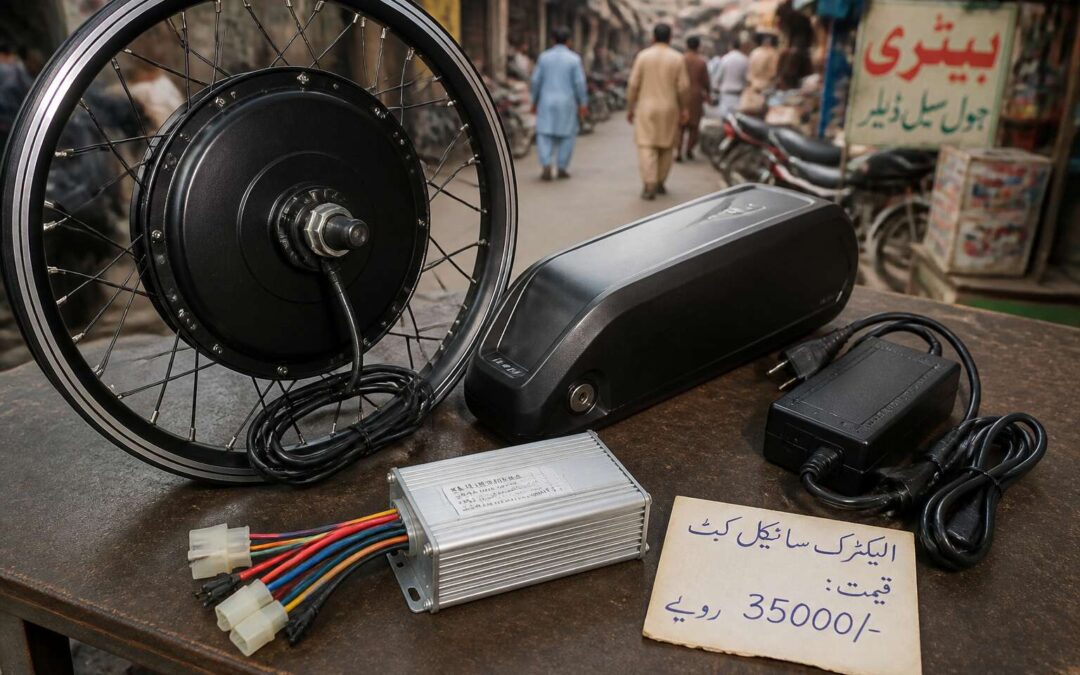
Understanding Electric Bicycle Conversion Kits
Types of Conversion Kits Available
Most people assume a conversion kit is a single object. It is not. It is a collection of compromises, and the first compromise is where you place the motor. When I watched a mechanic in Johannesburg mount a rear hub kit to a commuter bicycle, I understood that the choice changes the ride completely.
- Front hub kits pull the wheel and feel predictable for beginners.
- Rear hub kits push the bicycle and preserve the original drivetrain.
- Mid-drive kits use the bicycle’s gears and produce strong hill-climbing torque.
Each type demands a different skill set. Rear hubs are forgiving. Mid-drive units punish a lazy rider. Buyers evaluating the electric bicycle kit price in Pakistan will notice a wide gap between these options, because local factories there mass-produce hub motors while mid-drive systems remain imported and costly. That price in Pakistan offers a reference point, yet South African riders must weigh local import duties and the rand’s value. Understanding the mechanical difference matters more than chasing a bargain.
Core Components Inside a Standard Kit
Every conversion kit arrives as a box of carefully matched parts, and the connection between them decides how long the system survives. Inside a standard kit, the motor gets most of the attention, but the controller acts as the brain, translating throttle input into smooth power delivery. The battery, usually lithium ion, stores the energy that defines range. A display keeps you informed, and a wiring harness ties everything together.
The gap between budget and premium kits shows up in these components:
– Controllers in cheaper kits often lack thermal protection, causing shutdowns on hot South African climbs.
– Battery cells may be grade B rather than automotive grade, which shortens cycle life.
– Connectors can corrode in humid coastal conditions.
South African buyers studying the electric bicycle kit price in Pakistan will find lower numbers abroad, but local import duties and shipping costs close the gap. The electric bicycle kit price in Pakistan reflects local manufacturing scale, not the durability of components shipped overseas. Focus on cell quality and controller specifications when comparing options.
How to Assess Compatibility with Your Bicycle
Your bicycle’s frame hides secrets that determine whether a conversion works or fails catastrophically. I have seen riders discover this too late, after purchasing a bargain kit only to face a rear dropout that simply will not fit! Compatibility is not about brand names; it is about physical geometry. Before ordering, measure the following:
- Dropout width, typically 135mm for rear hubs, but some old mountain bikes use 130mm.
- The axle diameter, commonly 10mm or 12mm for thru axles.
- Chainstay clearance for the motor’s casing, which varies by spoke count.
More importantly, the bottom bracket shell must match the motor’s threaded or splined interface. Many cheap kits ignore disc brake rotor sizes, causing caliper interference. The electric bicycle kit price in Pakistan may tempt you, but nothing saves money like a frame that accepts the kit without custom machining.
Breaking Down the Price Tiers of E-Bike Kits in Pakistan
Budget-Friendly Kits and Their Features
The electric bicycle kit price in Pakistan is a ladder, not a flat rate. Entry level kits begin near PKR 12,000. You get a hub motor, a throttle, and a simple controller. These kits do the job, but they ask for patience.
Budget friendly kits include smaller batteries and basic displays. Top speed lands around 25 km/h. Range covers 20 to 30 kilometers. That works for city commutes on level roads.
- Straightforward wiring looms cut install time
- Cadence sensors, not torque sensors, keep costs down
- Simple LCD panels show speed and battery level
Plastic connectors and standard brake levers are the norm. The motor makes a quiet hum. For casual riders, this tier gives the most value for money. Once you step up, the electric bicycle kit price in Pakistan jumps quickly. Budget kits remain the logical entry point.
Mid-Range Options for Daily Commuters
Stepping up from the bargain bin, the mid-range tier of the electric bicycle kit price in Pakistan typically lands between PKR 25,000 and 40,000. Here, you get a torque sensor instead of the cadence sensor, which means the motor responds to how hard you push, not just that you are pushing. That changes everything for daily commuters who tackle slopes or carry groceries.
I have seen riders describe these kits as the “sweet spot.” You get a better display, often with a USB port, and a battery that lasts 40 to 50 kilometers. The wiring looms are cleaner, with weatherproof connectors. Some kits even include a throttle and pedal assist modes. For a solid point of reference:
- Torque sensors provide smooth, proportional power
- Removable batteries make charging easier
- LCD displays show trip distance and power output
The motor hum is quieter, and the components last longer. If you ride daily, this tier pays for itself in comfort and reliability. The electric bicycle kit price in Pakistan jumps again above this, but for most commuters, mid-range hits the balance.
Premium Kits for High Performance
Above PKR 40,000, the electric bicycle kit price in Pakistan enters a territory where performance becomes the whole point. These kits often ship with 750W to 1500W hub motors, delivering acceleration and hill-climbing ability that transforms an ordinary bicycle into a serious machine. The batteries are considerably larger, typically 20Ah or more, pushing range beyond 70 kilometers on a single charge.
For riders who demand speed and torque, this tier offers capabilities rarely found below it. I have seen kits with fully programmable controllers, allowing you to tune acceleration curves and top speed to your preference. Some include dual-battery setups, hydraulic brake sensors, and color displays with smartphone connectivity.
- Regenerative braking to recover energy on descents
- Mid-drive options for balanced weight distribution
- Weatherproof connectors rated for heavy rain
These kits carry a higher price, and the electric bicycle kit price in Pakistan reflects the engineering involved. But for enthusiasts building a capable machine, the investment delivers a riding experience that budget and mid-range offerings simply cannot match.
Battery Costs and Their Impact on Total Expenses
Before the first rupee changes hands, one fact governs every tier: the battery consumes nearly half the electric bicycle kit price in Pakistan. A 36V 10Ah pack might cost PKR 18,000, while a 48V 20Ah unit doubles that figure. This single component pushes budget kits above PKR 35,000 and luxe builds past PKR 80,000. Buyers often forget that replacement cells, not the motor, dictate long term expenses.
Consider how battery chemistry alters the math. Lead acid remains cheap, yet its weight and short lifespan inflate real costs.
- 10Ah lithium: PKR 20,000 to 25,000
- 15Ah lithium: PKR 30,000 to 38,000
- 20Ah lithium: PKR 42,000 to 55,000
These ranges mean that the electric bicycle kit price in Pakistan is less a reflection of mechanical parts and more a mirror of energy storage. For any rider, budget must shift accordingly.
Additional Accessories That Add to the Bill
Nobody buys an e-bike kit and rides away the same day. The electric bicycle kit price in Pakistan tells only half the story. The other half lives in the accessories that turn a box of parts into a working machine.
A budget kit near PKR 35,000 often lacks a proper charger. A decent one costs PKR 5,000. The controller might be basic, so you add a display unit for PKR 3,500. Throttle assemblies, brake sensors, and wiring harnesses quietly stack up.
Mid-range kits, from PKR 55,000 to 80,000, include more, but rarely everything.
– Torque arms: PKR 1,500
– Chain tensioner: PKR 2,000
– Installation tools: PKR 3,000 to 6,000
Each item feels small. Together, they reshape the final bill, making the real electric bicycle kit price in Pakistan higher than any sticker suggests.
Key Factors That Determine Conversion Kit Rates in Pakistan
Influence of Motor Wattage and Power
No two shops quote the same figure for a conversion kit, and wattage sits at the heart of that uncertainty. Motor power directly alters component quality, wiring gauge, and controller capacity, which is why the electric bicycle kit price in pakistan grows sharply beyond 500W. A 250W hub motor suits flat roads, while a 750W unit demands reinforced frames and better torque sensors. That hidden complexity drives costs upward. From my experience, local import duties and seasonal demand also shift rates by 10% to 20%. These elements matter most:
- Controller rating and thermal protection
- Hub motor material and magnet grade
- Wiring harness durability and connector type
A higher wattage motor inflates the bill through secondary upgrades, not just the motor itself. Pay attention to that ripple effect.
Battery Type and Range Capabilities
Battery cells account for nearly 40% of a conversion kit’s total cost. The electric bicycle kit price in pakistan leans heavily on whether you choose a 36V or 48V pack. Higher voltage extends range but demands a pricier battery management system.
Range capabilities depend on cell chemistry and capacity. Lithium-ion packs with LG or Samsung cells cost more upfront, yet they deliver consistent voltage over 800 cycles. Generic cells fade quickly and sag under load.
- Assembled configuration vs. standalone cells
- Charge cycle rating and depth of discharge
- Physical weight and frame mounting constraints
These variables move vendor quotes by up to 15%. For my part, I always verify cell brand before comparing rates. It saves headaches later.
Brand Value and Imported vs Local Manufacturing
Brand value shifts the final invoice. Two kits can share identical motors, yet the electric bicycle kit price in pakistan splits sharply based on the nameplate. Imported kits from established manufacturers carry documented load testing and certified waterproofing. Local assembly plants reduce shipping overhead but often substitute generic connectors and thinner gauge wiring.
– Warranty claim response time
– Spare part availability for controllers
– Actual cell sourcing, not advertised branding
I have watched local kits fail within months because the vendor skipped the voltage regulator. Imported units feel heavier, but that weight hides proper heat sinks. A 48V kit from a German or Taiwanese brand commands a premium that buyers in Karachi and Lahore accept for reliability. Even after import duties, the electric bicycle kit price in pakistan still rewards the buyer who verifies the factory origin.
Currency Fluctuations and Import Duties
Every time the rupee slips against the dollar, the electric bicycle kit price in pakistan moves within days. Importers pay in dollars and sell in rupees, so the gap between those two numbers defines their margin. I have seen a 48V kit jump by thousands overnight when the central bank adjusted the rate.
Customs duties pile on top. The tariff for a conversion kit varies with the port of entry and the declared components. Lithium cells face one slab, controllers another, and motors a third. Add sales tax and advance income tax, and the final bill can exceed the product’s original value by 40% or more.
- Interbank exchange rate spreads on the day of payment
- Regulatory duty changes announced in the finance bill
- Port handling fees and customs agent charges
The electric bicycle kit price in pakistan is therefore a moving number. A buyer who watches the currency market for a week can catch a favorable window, while another who purchases blindly pays the premium. These two factors, exchange rates and duties, shape every invoice printed in Karachi.
Seasonal Demand and Promotional Discounts
Seasonal demand shapes the electric bicycle kit price in pakistan more than most commuters expect. Sales climb sharply before summer and again ahead of Eid, when delivery riders and daily travelers rush to upgrade their bikes. Dealers hold firm during those weeks. But when winter arrives, the same importers quietly reduce margins to clear aging inventory.
Promotional discounts follow a recognizable rhythm:
- Eid and Independence Day offers from major distributors
- Year-end clearance on older motor and controller versions
- Bank installment plans that reduce the upfront payment
Buyers who track these cycles often pay less than the printed showroom rate. Timing the purchase around the local retail calendar, not bargaining alone, is what separates a good deal from an average one.
Where to Buy E-Bike Conversion Kits Across Pakistan
Popular Online Marketplaces and Their Pricing
Karachi’s port warehouses and Lahore’s electronics bazaars have gone digital, and many conversion components now sit on Daraz and OLX Pakistan. Daraz carries hubs and controllers with seller ratings and return policies, while OLX connects buyers directly with local sellers who negotiate. PakWheels forums offer used kits at a fraction of retail.
Popular online marketplaces for e-bike conversion kits:
- Daraz.pk: broad catalog, flash sales
- OLX Pakistan: direct negotiation
- PakWheels classifieds: used kits, genuine parts
Pricing across these platforms tracks the electric bicycle kit price in pakistan, with sellers pairing motor and battery bundles to close deals. A seller in Islamabad lists a standard kit for Rs. 18,000, but the same kit from Lahore costs Rs. 21,000, a variance shaped by shipping and warehouse stock. For anyone watching the electric bicycle kit price in pakistan, these platforms serve as a real time index, updated daily by thousands of vendors.
Specialized Local Distributors and Stores
Specialized local distributors remain essential to the conversion market. Their storefronts cluster in predictable districts, each with its own pricing rhythm.
- Karachi: Regal Chowk and Tariq Road
- Lahore: Hall Road and Liberty Market
- Islamabad: Blue Area and G-9 Markaz
- Peshawar: Qissa Khwani Bazaar
One distributor in Islamabad told me that customers often visit three or four shops before committing. The electric bicycle kit price in pakistan varies meaningfully between these stores, even for identical components. A kit from a Saddar retailer in Karachi may run Rs. 2,000 less than the same setup in Peshawar, shaping the electric bicycle kit price in pakistan.
Distributors also provide warranty support that online vendors usually avoid. If a controller fails after three months, a local shop will replace it. For buyers who value after-sales service, these stores are the safer route.
Exploring Second-Hand and Refurbished Kits
Somewhere in Lahore, a used hub motor is waiting to surprise its new owner. Good surprise or bad surprise? That depends on your patience. The electric bicycle kit price in pakistan drops dramatically in the second-hand market, often to half of retail. That number pulls in budget hunters.
A refurbished kit differs from a used one. Refurbished means a technician cleaned, tested, and replaced failing parts. Used means someone wants it gone. The price gap between them is narrow. The reliability gap is wide.
Where to find kits:
- Local repair shops that take trade-ins from customers upgrading their builds
- Private Facebook groups for e-bike hobbyists in Karachi and Islamabad
- Scrap yards near Regal Chowk or Hall Road for brave souls with multimeters
A workshop trade-in includes a recent diagnostic. A scrap yard find includes mystery. Test the battery voltage and controller before paying. Cheap can cost double when repairs follow.
Shipping Costs and Delivery Timelines
The electric bicycle kit price in pakistan rarely includes delivery. That detail surfaces only at checkout, after you have already compared motors and controllers. Shipping costs depend on the seller’s location and the kit’s weight. A 250-watt hub motor kit may cost 800 rupees to ship to Lahore, while a full 1,000-watt kit climbs toward 2,500 rupees.
Delivery timelines matter just as much. Couriers like TCS and Leopards promise two to four days between major cities. Imported kits from China or Dubai take longer, often two to three weeks through freight forwarders. Some sellers in Peshawar and Quetta rely on cargo trucks, which add a week but cut costs by half.
- Confirm whether shipping insurance covers damage
- Ask if the price includes cash on delivery
- Request a tracking number before payment
Batteries complicate every shipment. Dangerous goods regulations force some sellers to ship batteries separately, splitting the package and inflating the final bill. Ordering everything at once saves money, but only if the seller honestly discloses the full delivery timeline upfront.
Warranty and Return Policies of Different Sellers
Buying a conversion kit in Pakistan demands patience. Online sellers advertise flashy warranties, but the fine print tells a different story. Some offer a 30 day return window, while others treat ‘return policy’ as a foreign phrase. Local shops in Karachi’s electronics markets might swap a faulty controller on the spot, yet their warranty rarely covers shipping damage. Imported kits carry better guarantees, but claiming them means posting the motor back to China at your own expense.
Before you hand over cash, remember these points:
- Confirm whether the seller or the manufacturer honours the warranty
- Check if the warranty covers batteries, which most exclude
- Ask for written proof of the return policy, not verbal promises
The electric bicycle kit price in pakistan often excludes warranty coverage. Some sellers bundle a basic guarantee for an extra fee. Others quietly deduct restocking charges.
Installation Costs and Long-Term Value Considerations
DIY Installation vs Hiring a Professional
The real expense of an electric bicycle kit price in Pakistan is not always printed on the box. Professional fitting adds 5,000 to 15,000 rupees to the total, a figure that shifts with the shop and the condition of your bike. The DIY route charges nothing in labour, yet it quietly invoices you in time and frustration.
A seasoned mechanic finishes the job in two hours. A first timer might burn an entire Saturday working through torque arms and cable routing. The difference matters when you tally the long term value:
- A botched DIY install may damage the controller, costing more than the saved fee.
- Professional work often includes a tune up after your first few rides.
- Warranty claims are simpler when a certified shop did the fitting.
For a rider comfortable with spanners, the savings are real. For everyone else, paying a professional is the cheaper mistake in the long run.
Typical Labor Charges for Professional Setup
Professional fitting for an electric bicycle kit price in Pakistan ranges from 5,000 to 15,000 rupees. That range shifts with the workshop’s reputation and the age of the frame. The fee buys correct torque on the axle, cable routing, and a controller mounted away from vibration.
- Battery cradle reinforcement on uneven roads
- Brake sensor calibration for immediate cut off
- Waterproofing of exposed connectors
A seasoned mechanic finishes in two hours. Speed matters less than the adjustments after your first few rides. Spokes settle, cables stretch, and the system needs a tune up. Professional shops include that check in the fee. A rushed home installation may hide a loose connection until the hub motor draws full power at a traffic light. The resulting damage often costs more than saved labour. When you weigh the electric bicycle kit price in Pakistan against the full cost of ownership, certified fitting protects the investment.
Maintenance Expenses for Converted Bicycles
The electric bicycle kit price in Pakistan covers only the start. A converted bicycle demands regular maintenance. Motor torque speeds up chain wear, and the extra weight strains spokes and brake pads. Daily commuters will notice these parts wearing out faster.
- Chain and cassette swaps every 2,000 to 4,000 kilometers
- Brake pad replacements at shorter intervals than a standard bike
- Spoke tensioning after the first month
Ignoring these consumables can lead to hub motor failure, a costly affair! Regular servicing extends the system’s life. A maintained conversion easily lasts five years, making the initial expense worthwhile across every ride.
Comparing Total Conversion Cost to Buying a New E-Bike
When you compare the electric bicycle kit price in Pakistan against the cost of a factory built e-bike, the difference is stark. A solid conversion kit, battery included, often lands well below the entry price of a new electric bicycle from a local South African dealer. That gap matters for budget-conscious commuters.
The real calculation extends beyond the initial purchase. Professional installation fees, while modest, add to the total. Even with labor costs factored in, conversion typically saves you thousands of rand. The electric bicycle kit price in Pakistan, when converted to rand and adjusted for shipping, still offers a useful benchmark for local shoppers. A new e-bike also loses value faster, while your existing frame retains its character and fit.
Consider what you actually pay for:
- Kit purchase price
- Battery and charger
- Professional fitting or your own time
- Replacement consumables over two years
That full figure still sits under what a comparable new e-bike would cost you at retail. The long-term value becomes clearer each time you pass a petrol station.