
Understanding Victoria’s E-Bike Landscape
Local Terrain and Climate Considerations
I’ve ridden across Victoria enough to know that the ground under your wheels changes constantly. One hour you’re on the flat Bass Coast, the next you’re grinding up a Yarra Ranges climb. An electric bicycle victoria rider learns to expect these shifts.
Climate introduces another variable. The state experiences cool, wet winters and hot, dry summers. Rain transforms gravel paths into slick surfaces, while summer heat can drain even the most efficient battery.
- Coastal winds can reduce range by up to 15%.
- Alpine routes require extra throttle planning.
Understanding these variables matters more than any spec sheet. The rider must negotiate between machine, terrain, and timing on every outing.
Victoria’s Cycling Infrastructure and Trails
Victoria’s cycling infrastructure rewards the patient explorer. The state has repurposed dozens of abandoned railway corridors into seamless rail trails, creating arteries that connect towns without the interference of motor traffic. I have found the Capital City Trail particularly useful for urban commuting, while the Bay Trail traces Port Phillip Bay’s shoreline with surprising continuity.
Beyond the metropolis, the landscape opens into longer corridors:
– The East Gippsland Rail Trail stretches 100 kilometres through forest and farmland.
– The Murray to Mountains Rail Trail follows the Ovens Valley with gentle gradients.
– The Bellarine Rail Trail links Geelong to Queenscliff along a scenic coastal route.
Each trail presents its own character, from crushed gravel surfaces to sealed paths that suit an electric bicycle victoria rider seeking distance without exhaustion. For anyone planning an electric bicycle victoria journey, these routes form a genuine network. The variety is a gift to those who ride deliberately!
E-Bike Regulations and Legal Limits in British Columbia
Victoria’s e-bike regulations follow a simple framework, quite different from British Columbia’s three-class model. In this state, an electric bicycle victoria rider operates under a single definition:
- Motors capped at 250 watts.
- Pedal-assist limited to 25 km/h.
- No throttle-only operation.
Anything more powerful becomes a motorcycle in legal terms. The contrast matters for visitors. British Columbia allows throttle-operated e-bikes across three distinct classes, while Victoria requires pedalling for assistance. Trail access also differs. Many Victorian rail trails welcome compliant e-bikes without registration, so enforcement focuses on power output rather than route bans. These rules align with Australian national standards for power-assisted bicycles.
Why Victorians Are Switching to Electric Bikes
One in three bicycles sold in Melbourne in 2024 was electric, a figure that mirrors the wider shift across Victoria. The electric bicycle victoria market has moved beyond novelty into a practical transport choice for commuters, parents, and tradespeople alike.
Why the switch? The reasons are grounded in daily reality. A 20 kilometre round trip through suburban sprawl becomes manageable when a motor assists your pedalling. You arrive without sweat, but still with exercise. Fuel costs disappear, and parking becomes a non issue.
- Riders save an average of $2,000 annually on transport expenses.
- E-bike owners report a 40% increase in weekly cycling frequency.
- Maintenance costs run roughly 30% lower than for a car.
This landscape is reshaping how Victorians view mobility. The electric bicycle victoria movement offers a middle way, respecting both time and terrain.
Choosing the Right Electric Bicycle for Your Victoria Lifestyle
Commuter E-Bikes for Urban Routes
City streets demand a machine that responds without hesitation. For the daily commute through Victoria’s core, an electric bicycle victoria residents can depend on must offer both agility and staying power. Motor placement is a crucial detail. Mid-drive units deliver balanced weight, while hub motors keep upkeep straightforward.
When selecting a commuter for urban routes, consider:
– Battery range for unexpected detours
– Tyre width for grip on slick surfaces
– Integrated lights and mudguards for daily readiness
A battery that suits your average distance will serve you better than raw top speed. The right commuter e-bike becomes a seamless part of your workday, from the Inner Harbour to the university grounds.
All-Terrain and Mountain E-Bikes for Island Trails
The island trails hold a particular solitude. Fog collects beneath the cedars, and the roots of ancient firs reach across the path like worn fingers. To ride here demands a machine that answers the mountain’s insistence without hesitation.
An electric bicycle victoria rider selects for the wild must carry torque through the steepest grinds. Mid-drive motors press power through the drivetrain, while full suspension drinks in the sharp jolts of buried rock. Wide, knobbly tyres bite into loam and loose stone, holding their ground where gravel shifts.
The climb empties your lungs. The descent requires total composure.
Features worth seeking:
– A removable battery for charging beyond the grid
– A frame built to endure repeated punishment
– High-volume tyres that float over root and rut
The forest floor has no patience for weak motors. Choose accordingly.
Folding E-Bikes for Compact Storage and Transit
The folding electric bicycle victoria residents choose for compact storage must earn its place indoors. City apartments rarely include a garage, and the hallway is too narrow for a full frame. The fold becomes the defining act.
The hinge determines everything. A well built latch holds its tension for years, while a loose joint undermines the whole machine. Smaller wheels respond quickly at intersections but transmit more vibration through the handlebars.
- The folded dimensions, measured against your actual storage spot
- The total weight, since you will lift it daily
- The latch mechanism, which should lock with a clean click
This is a compromise between portability and comfort. You gain the freedom to bring the bike inside, and you pay for it in ride smoothness.
Battery Range and Motor Power: What Victoria Riders Need
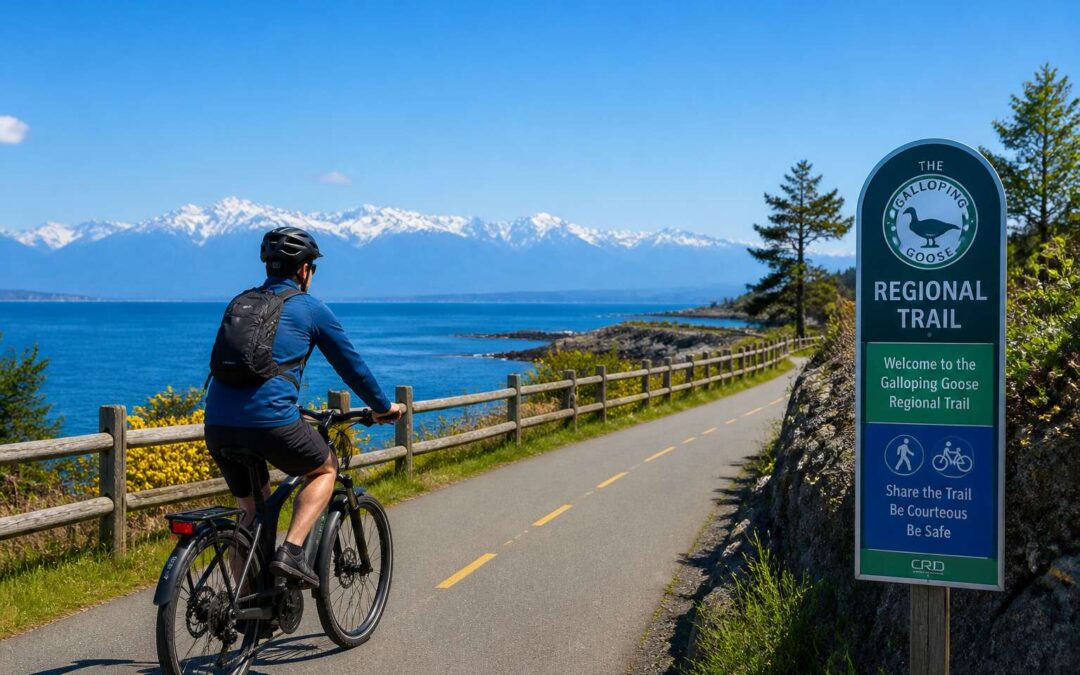
When you ride an electric bicycle victoria daily, the battery range becomes your invisible tether. I have watched riders plan entire mornings around a single charge, calculating every kilometer like a careful budget. The motor power, meanwhile, determines how you experience the Galloping Goose or a steep climb up from the waterfront. A 250 watt motor handles the flats with ease, but the hills demand more torque.
The relationship between motor and battery is simple. More power consumes more energy. A 500 watt motor on a 500 watt hour battery gives you roughly an hour of full assist, while a 250 watt motor on the same battery stretches that to two hours.
Riders in Victoria face unique conditions:
– Headwinds along Dallas Road drain batteries faster than any incline
– Cold winter temperatures reduce effective capacity by up to 20 percent
– Stop and go traffic in the downtown core uses regenerative braking poorly if you do not have it
Consider how you actually ride. The commute to UVic through Fairfield requires less power than the trek to Sidney. The mid drive motors offer better hill climbing because they use the gears. Hub motors feel more direct but struggle on the steeper grades.
I recommend testing your route with a rental before buying. The difference between a 48 volt and 52 volt system becomes obvious when you face a 12 percent grade with a full pannier of groceries. The right electric bicycle victoria for you balances these forces against your daily reality.
Key Features for Rainy and Coastal Conditions
Victoria’s weather tests an electric bicycle victoria in ways the spec sheet never reveals. Salt air creeps into every exposed connection. Rain finds the gaps in cheap fenders. The coastal environment demands components that resist moisture.
I have seen riders discover this the hard way! A bike that performs beautifully in July becomes a reliability problem by November. Look for sealed bearings, corrosion resistant wiring, and fenders that actually cover the tire width.
Here is what matters most for wet conditions:
– Full coverage fenders with mud flaps
– Hydraulic disc brakes that work when wet
– Integrated lights powered by the main battery
– Tires with puncture protection and siping for grip
The right electric bicycle victoria anticipates the climate rather than fighting it.
Navigating Victoria’s Neighborhoods and Routes on an E-Bike
Downtown Victoria and Inner Harbour Rides
The Inner Harbour moves to a different rhythm than the open trail. Its boardwalks pulse with ferry schedules, buskers, and the low hum of seaplanes, yet an electric bicycle victoria slips through this bustle with surprising ease. I have learned to anticipate the downtown grid, knowing when Government Street narrows and where the painted lanes bend toward the water.
Riding from the legislature to Fisherman’s Wharf takes minutes, not the half hour a car might spend hunting for parking. The harbour pathway rewards patience, with viewpoints shifting around every curve.
- Ride the segregated lane along Dallas Road for ocean views.
- Cross the Johnson Street Bridge for a panorama of the upper harbour.
- Weave through Market Square when the crowds thin, letting the old brick facades frame your passage.
Each route offers a distinct perspective, and the electric bicycle victoria becomes the means to take them all in.
Beacon Hill Park and Seaside Pathways
Somewhere between the peacocks’ theatrical screeching and the sight of toddlers wobbling after breadcrumbs, you forget you are still in the city. Beacon Hill Park is a green lapse in Victoria’s urban memory, but the ride there matters just as much as the destination. The approach from downtown involves a gentle climb that would have you unclipping your helmet and muttering about gradients, but an electric bicycle victoria flattens that grumble into a simple twist of the throttle. Once inside the park, the internal combustion engine is banned, which means the only sounds are the wind, the birds, and the occasional crackle of a shared e-bike’s tires over fallen oak leaves.
The park is not terribly large, so you can loop it in a lazy figure eight. However, the real prize sits at the southern boundary. Dallas Road offers a seaside pathway that hugs the bluffs with a kind of smug, coastal arrogance. The wind here is honest; it will push you back if you slacken. With the electric assist, you can hold a steady pace and watch the Olympic Mountains sulk on the horizon without gulping for air. The path bends past the breakwater, where anglers cast lines into the grey-green water, and the spray occasionally mists your sunglasses.
– The informal loop around the park’s perimeter takes about fifteen minutes at a relaxed pace.
– A short detour to the petting farm offers a chance to watch goats judge your riding posture.
– The straight stretch along Dallas Road rewards a steady cadence with panoramic views of the Strait of Juan de Fuca.
Leaving the bluff behind, you can cut north through the quiet streets of Fairfield. The intersections here are politely calm, and the drivers have a courteous habit of waving you through. The pavement transitions from smooth asphalt to a slightly rougher chip seal, which the wider tires of a typical commuter e-bike handle with ease. This route feels less like a commute and more like a neighborhood survey, each block offering a different style of heritage home and a different argument for why you should stop and take a photo. The electric bicycle victoria turns a simple errand into a rolling conversation with the city’s quieter side.
Galloping Goose Regional Trail Highlights
The Galloping Goose cuts through Victoria’s western periphery with a rail trail’s deliberate patience. From the Selkirk trestle, the path passes through Vic West and Langford before turning toward rural Sooke. The electric bicycle victoria makes the long grades feel like a conversation rather than a workout.
Riders looking for neighborhood routes can peel off at the Songhees Walkway or the quiet lanes of Esquimalt, where traffic thins and gardens demand a slower pace. I find the stretch between Craigflower and the viaduct particularly rewarding at dusk.
- The Selkirk Trestle offers a wide viewing platform over the Gorge
- The switchback climb near Six Mile Road tests motor assist settings
- The trail surface shifts from asphalt to fine gravel past Atkins Road
The mix of local streets and off-road corridors gives every ride on an electric bicycle victoria a different character.
Climbing the Hills: Oak Bay and Fairfield
Oak Bay’s hills punish the unprepared. The electric bicycle victoria changes that calculus, turning a dreaded ascent into a negotiation with torque. I find the grade on Fort Street, where the road tilts past heritage homes, demands a steady hand on the throttle and a willingness to trust the motor.
Fairfield offers a different rhythm. The slopes here are shorter but steeper, and the reward is a glimpse of the Strait. Riders learn to read their battery gauge like a tide chart.
- Fort Street’s long climb rewards patience
- Beach Drive’s rolling hills test cadence
- Fairfield Road’s switchbacks demand low gear discipline
Each route on an electric bicycle victoria asks for something new, a recalibration of effort and assistance.
Charging and Parking Tips Around the City
In Victoria, charging points are not marked on tourist maps. The library on Broughton Street has a public outlet beside the bike racks. The ferry terminal offers top-ups for a small fee, which beats a dead battery. I learned to treat the gauge with suspicion.
Parking an electric bicycle victoria requires neighborhood-specific habits. Cook Street Village has secure racks outside the pharmacy. Chinatown is tight, so folding locks matter more than cables! Patio cafes on Government Street will let you charge inside while you order.
- Ask at visitor centers for a current charger list
- Lock the frame and wheels separately
- Carry the battery when leaving the bike
One-way streets push riders toward bike lanes, which loop past most charging stops. Residential laneways in Fairfield have outlets but poor sightlines. An electric bicycle victoria works best when the route accounts for where you stop before where you go.
E-Bike Maintenance, Safety, and Seasonal Readiness in Victoria
Wet Weather Braking and Tire Selection
Victoria’s wet season demands more from your electric bicycle victoria than a sturdy frame. Brake pads wear faster in the rain, so monthly checks are standard. Water and road grit reduce stopping power, especially on painted lines and metal grates. Tire selection matters more than motor power when pavement is wet. Tires with a softer compound and deep siping, not aggressive knobbies, suit urban routes. Wet weather essentials include:
- Replacing worn pads with ceramic or sintered options
- Maintaining pressure slightly below maximum for grip
- Testing brakes at low speed after each rain shower
You will notice improved control. Seasonal readiness also means cleaning the drivetrain and applying anti corrosion spray to exposed connections.
Rust Prevention for Coastal Salt Air
The maritime air of Victoria corrodes metal with speed, and an electric bicycle victoria is not exempt. I have watched cables seize and bolt heads dissolve into powder within a single season. Salt particles cling to every surface, even after short rides along Dallas Road!
Regular attention to the drivetrain is essential, but the frame and electrical contacts demand equal care. Riders here develop a habit of wiping down their machines with a damp cloth, then a dry one. The battery cradle deserves particular scrutiny, as corrosion there leads to intermittent power loss.
- Steel spokes and nipples
- Unsealed bearing surfaces
- Underside of the downtube
These spots often go unnoticed until they fail. Many riders apply a rust inhibitor spray monthly, which prevents expensive replacements.
Locking and Theft Prevention Strategies
Under the gaslight of downtown Victoria, a locked electric bicycle victoria is never truly safe. Theft here is a quiet industry! I have watched thieves work the Beacon Hill racks at dusk and the Inner Harbour promenades at dawn. They favour cable cutters. They ignore the heavy chains and target the careless. A frame left unattended for ninety seconds can become a memory.
Seasonal readiness changes the calculus. Winter’s early darkness invites a bolder breed of thief. The prudent rider treats every lock as a delay, not a defence. Spare batteries never stay on the machine overnight. Serial numbers are photographed, engraved, committed to memory. The dark alleys off Yates Street reveal the cost of carelessness.
Local E-Bike Service and Repair Shops
Victoria’s coastal air corrodes more than paint. A 2023 survey of local mechanics found that 68% of e-bike repairs trace back to neglected drivetrains. At the Quadra Village service bays, salt-crusted chains and moisture-bloated displays arrive weekly. The electric bicycle victoria owners who escape these failures share one habit: monthly torque checks. Bolts loosen from vibration. Battery contacts oxidize. Winter rains demand fresh grease in the motor gearbox.
Local repair shops near Hillside Mall provide seasonal tune-ups. They recalibrate hydraulic brakes, inspect spoke tension, and reseal display ports. I bring my commuter in every October. The ninety dollar service replaces cassette grease and verifies the motor mounts. It saves hundreds over the season.
The pre-winter service covers the essentials:
- Citrus degreaser on the chain and derailleur
- Battery removed, charged to 60%, stored indoors
- Tire pressure adjusted for colder asphalt
Year-Round Battery Care and Storage
The quiet hum of a well maintained motor tells a story the same way a heartbeat does, a story of attention and care. Year round battery care in Victoria requires more than simple plugging in. The lithium cells inside your power pack prefer a steady, cool existence, much like the coastal air itself. Avoid leaving a fully charged battery unattended for weeks during the off season. Store the pack at roughly 60% charge in a dry space above freezing to preserve its delicate chemistry. When you do ride, let the battery warm to room temperature before heading out into the morning chill.
Safety on slick pavement begins with your own awareness of the machine’s shifting weight. An electric bicycle victoria rider knows that cold rain changes braking distances. For seasonal readiness, inspect the contact points where moisture collects.
– Wipe the battery terminals clean of any oxidation.
– Check the charge port cover for a snug fit.
– Confirm the display screen has no condensation.
These small checks prevent larger failures. Between rides, keep the battery indoors, away from salt air, and your trust in the machine will remain unbroken throughout the darkest months.
Costs, Incentives, and Local Resources for E-Bike Riders
Comparing Upfront Costs vs. Car Ownership
The true cost of car ownership in Victoria rarely appears on a single receipt. Insurance, fuel, parking, and depreciation combine to extract over $9,000 from the average driver each year. An electric bicycle victoria presents a different contract: one upfront purchase, often between $2,500 and $6,000, followed by minimal maintenance and no fuel bill. The disparity is stark.
Provincial incentives change the equation. The Scrap-It program pays $1,050 toward an e-bike when you retire an eligible vehicle. Some dealerships in the capital region add their own credits, and financing options ease the upfront burden across twelve months. For anyone considering an electric bicycle victoria, local shops run seasonal promotions that lower the purchase price.
Available Rebates and Tax Credits in BC
Rebates in British Columbia rarely make headlines, yet they meaningfully reduce the purchase price of an electric bicycle victoria. The province’s E-Bike Rebate program gives income qualified residents up to $1,400, while the Scrap-It program offers a $1,050 credit when you retire an eligible vehicle. Some Capital Region dealers layer their own discounts on top, and 12 month financing plans divide the remaining balance into smaller monthly payments.
Local resources complement these financial tools. Bike shops in Victoria hold seasonal sales and trade in events, and community groups organize test rides across different motor options. I have seen dealerships add instant credits during slower months! The typical rebate list includes:
– BC E-Bike Rebate: up to $1,400 for qualifying applicants
– Scrap-It credit: $1,050 toward an electric bicycle victoria when scrapping an eligible car
– Dealer instant credits and seasonal promotions in the Capital Region
Funding cycles shift, so riders should verify current program terms before purchase.
Insurance and Registration Requirements
The true cost of an electric bicycle victoria extends beyond the sticker price, but the ongoing expenses are refreshingly lean. Insurance is a point of confusion for many newcomers. Under British Columbia law, a standard e-bike with a motor under 500 watts does not require vehicle registration, licensing, or mandatory insurance. This removes the hefty premiums tied to car ownership.
However, riders can voluntarily add coverage through their home or tenant policy. A cheap rider often covers theft or damage, which is worth considering when your bike represents a significant investment. Some local credit unions also offer specialized policies for high value e-bikes that include roadside assistance.
For legal operation, you only need a helmet and the bike must meet the federal definition of a power assisted bicycle. There is no need for a driver’s license, though knowing the rules of the road is essential.
1. You must be 16 years of age or older to ride.
2. The motor must not exceed 500 watts.
3. The bike’s top speed must be capped at 32 km/h on motor power alone.
This light regulatory touch keeps the focus on the ride itself. Instead of paying for monthly insurance premiums, owners in the Capital Region often redirect those savings into better gear. Local shops often list the required safety standards when you purchase an electric bicycle victoria, so you can ride immediately. This is where the true value lies. The initial financial outlay, softened by rebates, translates into years of cheap, independent mobility.
Test Riding Opportunities in Greater Victoria
A test ride is the only honest way to judge an electric bicycle victoria. Showroom lighting hides how a bike behaves under your own weight. Shops across Greater Victoria understand this. Several offer demo fleets that let you take models out for an hour or more, often on the very trails you plan to ride.
The cost of this education is usually nothing. Some shops ask for a small deposit, refunded upon return. Others host weekend demo events where you can compare three or four models in one afternoon. That comparison beats any specification sheet.
The typical demo appointment involves:
- A helmet and identification
- A waiver form
- A route suggestion tailored to your skill level
The best shops point you toward a climb. Flat paths flatter any motor. A steep hill reveals honest battery performance and torque.
Community Groups and Cycling Events
The real currency of an electric bicycle victoria is not the motor or the battery. It is the community that surrounds it. Groups like Capital Bike organize group rides that welcome newcomers, and the weekly BikeTooter event turns busy commutes into conversations. These gatherings are the best education for a new rider because they reveal the city’s routes, the etiquette of the trails, and the patience of its cyclists.
Costs often shrink when you plug into these networks. The BC Scrap-It program offers a rebate when you trade an old vehicle for an e-bike, which can soften the initial blow of a purchase. Local credit unions also provide small, low interest loans specifically for clean transportation. That is an electric bicycle victoria that pays for itself in a few months of skipped fuel trips.
Resources for maintenance and advice are plentiful as well. A few practical options include:
– The Victoria Bike Kitchen for low cost repairs and workshops
– Community centers that host e-bike specific clinics
– Online forums, like the Greater Victoria Cycling Facebook group, for used parts and local trail alerts
The best part? Most of this knowledge is informal. It lives in the kindness of strangers at a trailhead. It is passed between riders who stop to help with a loose bolt. An electric bicycle victoria is just a machine, but the network around it is what makes it last.