
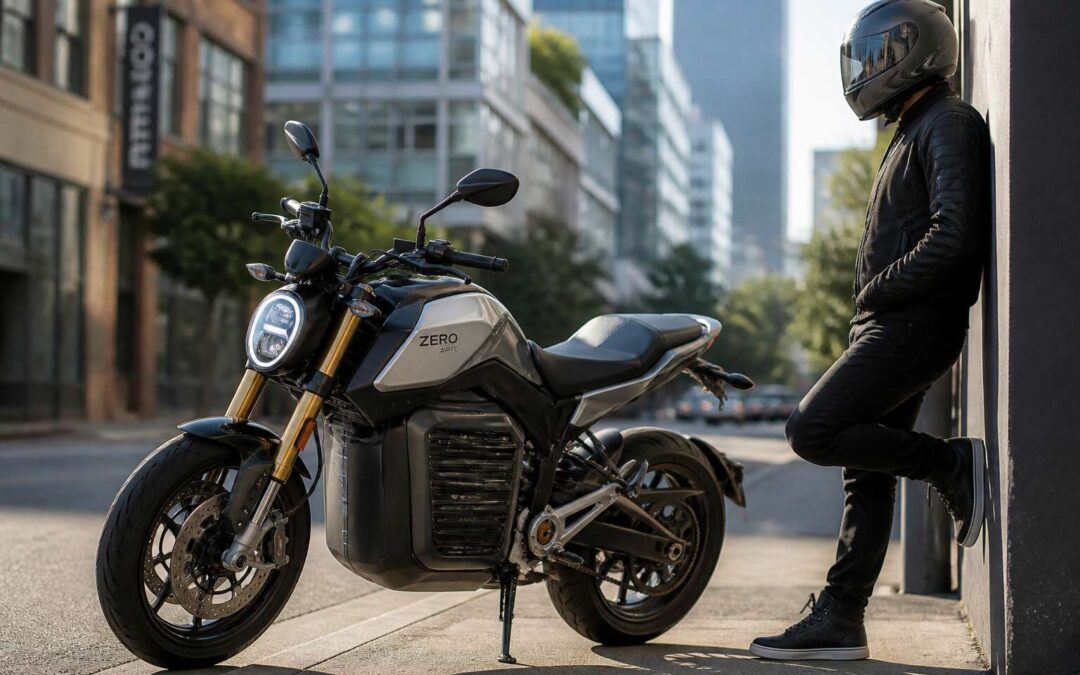
E-Bikes vs. E-Motorcycles: Core Distinctions
Pedal-Assistance Systems and Throttle Mechanisms
The line between commuter tool and weekend beast is drawn by a single throttle grip. The pedal-assistance system, or PAS, responds to your pedalling rhythm, while a throttle summons power with a twist of the wrist. On the rain-slicked streets of Cape Town, that choice dictates your entire riding character. The core distinction is engagement: one system asks for your labour, the other for your command.
Here are the mechanical truths that separate the two species:
- Pedal-assist rewards effort, stretching battery life and keeping you in motion.
- Throttle control offers instant surge, ideal for escaping a traffic snarl.
The PAS whispers cooperation, the throttle roars obedience. When you test ride an electric bicycle motorcycle, feel for that weight of control. Some riders want the motor to amplify their legs; others want to forget pedals exist entirely.
Frame Architecture and Weight Distribution
Frame geometry separates the electric bicycle motorcycle species more sharply than any battery specification. An e-bike borrows its structure from the bicycle world, with a low bottom bracket and a long wheelbase for pedalling stability. An e-motorcycle uses a steeper head angle and a rigid swingarm to manage higher speeds.
Weight distribution reveals the critical divergence:
- An e-bike keeps mass centred near the cranks, allowing you to lift it over a kerb without strain.
- An e-motorcycle places the battery low within the frame for cornering grip, adding heft you feel at walking pace.
On South African roads, I notice that difference every time I stop at a robot. A commuter e-bike behaves differently from a performance e-motorcycle in crosswinds and on gravel. The electric bicycle motorcycle you choose should match the terrain under your wheels.
Speed Capabilities and Power Classifications
I’ve lost count of the times I’ve watched a commuter e-bike glide away from a robot while a performance e-motorcycle waits for clear tarmac. The electric bicycle motorcycle category splits sharply on speed and power. E-bikes, constrained by pedal-assist limits on 250W and 25km/h, prioritize efficiency in stop-and-go traffic. E-motorcycles, drawing 4kW to 11kW, crush those limits with highway-legal velocity.
Power classifications reinforce this gap. Regulatory frameworks often tier these machines by output. A standard e-bike’s motor accommodates gentle hills; a e-motorcycle’s drivetrain demands robust battery management and high-speed gearing. That engineering divergence determines which terrain you can conquer.
Rider Posture and Ergonomics Compared
Riding posture separates these two machines faster than a pothole on Jan Smuts Avenue, and I’ve winced from both saddles. An e-bike puts your spine at a dignified garden-party angle, perfect for hailing a coffee or dodging a minibus taxi. An e-motorcycle, however, demands a crouched, elbows-out stance that makes you feel like a human sail. One machine invites you to admire the scenery; the other dares you to become part of it.
Ergonomics follow this split, and you can feel it in every joint:
- E-bikes: upright handlebars, wide saddles, relaxed leg extension.
- E-motorcycles: low clip-ons, rear-set pegs, a torso angled like a sprinter.
Your lower back will know the difference within five kilometers. For the electric bicycle motorcycle debate, posture dictates your daily commute, not just the battery life. Try both before you commit!
Performance Metrics That Matter
Motor Wattage and Torque Output
South African hills have a way of exposing a weak motor. A 250 watt unit might get you home, but facing a steep incline on an electric bicycle motorcycle changes the calculation. Wattage is the rated maximum output. Torque is the physical push. The first predicts top speed. The second predicts hill climbing.
- Wattage governs sustained output.
- Torque governs what you feel from a standstill.
That difference is why two bikes with identical wattage can ride completely differently. One delivering 90 Nm at the wheel will launch you across a junction. Another with 40 Nm will strain. Always compare torque figures. They matter more than the marketing gloss. Your electric bicycle motorcycle should feel like a partner, not a burden.
Battery Voltage and Discharge Rates
Voltage determines how forcefully your electric bicycle motorcycle responds. A 52 volt pack delivers current with less strain than a 36 volt pack, especially when the battery drops below half capacity. Discharge rate, expressed as C, shows how rapidly cells release energy. A 1C battery empties itself in sixty minutes. A 2C battery does so in thirty, but requires thicker wiring to manage the heat.
This distinction becomes evident on sustained gradients. Voltage sag weakens throttle response! The machine then feels lethargic, even with a full charge indicator. Choosing a battery with an adequate discharge rate for your terrain prevents that disappointment. No spec sheet replaces real world readiness.
Acceleration Profiles and Top Speed
Acceleration profiles separate machines that merely move from those that respond. The motor’s torque curve, not its wattage rating, defines the experience. In Johannesburg traffic, that difference decides whether you slip through a gap or wait for the next light. I have ridden electric bicycle motorcycle models that sprint to 30 km/h in under four seconds, yet feel docile at cruising speed.
Top speed, meanwhile, is a number that flatters. Real conditions, wind, gradient, rider weight, alter it substantially. The claimed maximum often appears at full battery charge on flat tarmac. A useful metric is sustained speed on a 5 percent incline.
- Acceleration time from standstill to 30 km/h
- Sustained speed on a 5 percent grade
- Recovery time between hard pulls
These three figures tell you how an electric bicycle motorcycle behaves when it matters.
Climbing Ability and Load Capacity
More than a few electric bicycle motorcycle owners in Johannesburg have discovered that a gloriously flat commute tells you nothing about the machine’s character. The real test begins when the road tilts upwards, and the suburbs of Melville or the slopes of Linksfield demand a response. Climbing ability is the soul of the machine, and it is where cowardly engineering is exposed.
Load capacity compounds the challenge. A rider carrying a laptop bag and groceries in a rear pannier add thirty kilograms, and the mass amplifies every gradient. I have seen a cleanly designed electric bicycle motorcycle transform into a lethargic commuter under such burden. The suspension sags, the steering feels heavy, and the motor labours. The machine that performed so willingly on flat ground now feels like a different creature entirely. You carry the weight, and it carries you.
Here is what separates a genuine performer from a spec-sheet hero:
– A motor that holds its cadence on a sustained 6 percent incline without a dramatic drop in speed.
– A controller that distributes power smoothly when climbing at low velocities.
– A frame and suspension configuration that remains composed with a fully loaded rear rack.
The battery drains visibly on these ascents, and that is another metric to respect. A claimed range of 60 kilometres might realistically be closer to 35 kilometres when your route is built on hills. The voltage sag under load is immediate, and the speedometer tells the truth. City centres like Pretoria’s inner core, with their short, sharp rises, are merciless on a weak system.
I prefer to think of torque delivery in this context. The motor must reach deep into its reserves, pulling with a steady hand rather than a frantic burst. A rider who knows their route, who has memorised every steep section, will plan their approach with a run-up. But this is a compromise. An electric bicycle motorcycle that conquers the incline with a calm, deliberate force is worth every rand. The load disappears, the horizon clears, and the city opens up before you.
Real-World Range Variations
The brochure range of an electric bicycle motorcycle is a laboratory creature, born on a test bench with a fresh battery, a stationary rider, and perfect weather. Your reality in Johannesburg or Durban is a different beast. A cold Highveld morning can steal 15 percent of your capacity before you even leave the driveway, and that same battery will swell with warmth on a summer afternoon, only to fade when the tropics bring humidity.
Real-world range is a negotiation, not a promise. Stop-and-go traffic through Sandton, persistent headwinds on the N1, and the constant micro-acceleration of urban riding all drain the pack faster than any steady cruise. I have watched a delta of ten kilometres vanish between two identical rides simply because the wind changed direction.
- Battery temperature swings between winter and summer extremes
- Wind resistance that depletes charge proportionally to speed squared
- Regenerative braking efficiency which varies with traffic flow patterns
These variables shift the gap between claimed and actual range by a margin that few owners anticipate. The electric bicycle motorcycle that delivers 50 kilometres on an evening loop might manage three quarters of that on a weekday commute through heavy traffic. You learn to read the gauge, not the spec sheet.
Navigating the Legal Landscape
Classifying Your Vehicle by Jurisdiction
South Africa’s National Road Traffic Act defines vehicle classes with a precision that makes lawyers smile and riders wince. For every electric bicycle motorcycle, one technical specification can determine whether you legally count as a cyclist or a motorist. Provincial interpretations rarely agree, and the consequences of guessing wrong differ from town to town.
The classification puzzle depends on three variables:
- Rated power output in watts
- Maximum assisted speed
- Whether the throttle operates without pedalling
These factors decide whether your electric bicycle motorcycle demands a licence, registration, or simple compliance with bicycle rules. The ambiguity carries real financial weight, and a traffic officer in Polokwane may read the same regulation differently from one in Durban. I have watched riders face municipal fines for that confusion.
Licensing, Plates, and Registration Rules
In South Africa, the electric bicycle motorcycle promises to save the rider from petrol pumps, but the traffic department expects a different kind of patience. The classification readings we already examined now become your paperwork. A single wattage value can make you a cyclist with a basket or a motorist with a registration certificate. That distinction is not symbolic; it touches your finances and your rights.
A typical process might follow this sequence:
- Keep the motor’s compliance label visible and legible.
- Present your identity document and proof of residence.
- Allow an inspection to verify brakes, lights and tyres.
- Collect the prescribed fees and receive your number plate.
Once registered, the electric bicycle motorcycle carries new obligations. You may no longer use the bicycle lane. Your insurance requirements change. A clerical error can turn a pleasant commute into a licensing dispute. That is simply the price of the battery assisted journey.
Safety Equipment and Helmet Statutes
South Africa’s helmet statutes draw a sharp line between pedal cycles and motor vehicles. Once your electric bicycle motorcycle is classified as a motorcycle, a certified helmet becomes compulsory. Eye protection follows, and many provinces also demand rear view mirrors on both sides.
The law does not treat safety gear as a suggestion. A traffic officer can stop an electric bicycle motorcycle for a missing reflector or a silent horn, and the fine arrives before you can argue.
Inspectors typically check:
- A helmet bearing the SABS mark
- Working brake lights and indicators
- A horn audible at 90 metres
- Tyres with legal tread depth
Gloves and protective clothing sit outside the statutes, yet riders who skip them take a calculated risk with their own skin. The helmet law is non-negotiable, and the courts read it literally.
Battery Technology and Charging Solutions
Comparing Lithium-Ion Chemistries
Selecting an electric bicycle motorcycle requires weighing silicon carbide inverters and thermal management, but the core decision is the lithium-ion cell chemistry. In South Africa, summer heat raises battery stress. Chemistry dictates safety and longevity.
Nickel manganese cobalt (NMC) cells store the most energy per kilogram, enabling longer trips between charges. However, they degrade faster when exposed to high heat or frequent full discharge cycles. Lithium iron phosphate(LFP) cells weigh more, yet they endure thousands of charges and tolerate warmer climates with less capacity loss. This tradeoff shapes charging solutions. LFP packs accept sustained fast charge currents, while NMC packs require careful throttling.
- NMC has higher energy density and shorter heat tolerance
- LFP has lower energy density and longer cycle life
- Ambient temperature alters recommended voltage limits
Battery Swapping Programs
Three minutes. That’s the average pit stop for a petrol scooter rider in Johannesburg. Battery swapping closes that gap for electric rides. Load shedding schedules don’t care about your state of charge, so swapping programs offer a workaround. You pull up, eject the depleted pack, slot in a fresh one, and leave.
For an electric bicycle motorcycle, the benefit goes beyond speed. You avoid deep discharge cycles, and the station handles thermal management for you. That means longer pack life without you thinking about voltage limits.
Consider what a swap subscription includes:
- Access to a network of charged packs
- Monitoring of cell health and temperature
- No upfront cost for the most expensive component
Thermal Protection and Battery Management Systems
In the highveld heat, a battery is not a silent partner. Ambient air at 38 degrees can push a lithium cell into thermal stress, and a battery management system tracks voltage across every parallel group. A single imbalance, left alone, can trigger a chain reaction that ends in a swollen pack. That is the arithmetic of failure.
Charging solutions go beyond plugging in. Thermal protection wraps the cells to slow heat ingress during Durban humidity or Joburg afternoons. Without it, fast charging becomes a gamble. With it, you can replenish the pack without baking its cells. The system adjusts charge current based on cell temperature rather than state of charge alone. That quiet work is what keeps an electric bicycle motorcycle trustworthy.
Extending Battery Lifespan with Proper Storage
A battery stored incorrectly loses capacity faster than one ridden daily. In South African summers, an electric bicycle motorcycle left in a hot shed can shed 20 percent of its range in a single season. The chemistry settles when the pack rests at 40 percent charge. Charging solutions should account for storage as well as daily use.
Humidity and heat accelerate degradation. I store my pack inside the house, away from direct sunlight. The battery management system continues its monitoring, but only if you keep the charge low enough to avoid stress.
- Target 40 percent state of charge
- Keep ambient temperature below 25 degrees
- Check voltage monthly
Recharge every eight weeks to prevent deep discharge. This routine maintains cell health! Proper storage is the overlooked half of battery technology. It determines whether the vehicle serves you for five years or two.
Home Charging Setup Requirements
South Africa’s grid has fluctuations that punish careless charging. The home charging point is a dedicated circuit for your electric bicycle motorcycle. A 16-amp socket, properly earthed, supplies the power the charger expects. Surge protection is an absolute necessity! A grid spike can cook the power supply in milliseconds.
I have learned to treat the charging location as its own territory. It must be dry, away from direct water paths and away from flammable materials. Ventilation matters, because the battery emits warmth during the cycle. The plug and socket experience micro-erosion every time you connect. Scorch marks are a warning sign;a loose connection ruins cells silently.
Voltage stability is another factor. Old wiring yields under load, causing the charger to strain. The wire gauge matches the draw or the charger fails. The humble wall socket deserves your respect.
Total Cost of Ownership Deep Dive
Initial Price Comparison Between Categories
Price tags for an electric bicycle motorcycle vary wildly across South Africa. A basic pedal-assist bicycle might cost R15,000, while a full electric motorcycle can exceed R80,000. The difference reflects battery capacity, motor wattage, and suspension quality.
Buyers often overlook extras that shift the initial price. I have seen riders skip these details, only to pay later. These include:
- A second charger
- Registration fees
- Protective gear
Each adds hundreds to the total. Consider what each machine includes as standard!
The mid range option offers a sensible entry point. It delivers commuting range without the full insurance burden of a motorcycle registration. That makes it a rational choice for city riders watching their budget.
Energy Costs: Charging versus Fueling
When the warranty expires and the novelty fades, the energy bill becomes the real owner. A petrol motorcycle running 40 kilometres a day burns through R40 or more in fuel depending on your commute traffic. An electric bicycle motorcycle on the same route draws roughly 0.8 kWh from the grid, worth about R2 at standard municipal tariffs in South Africa. The contrast is not a rounding error; it is a structural advantage.
Here is a typical weekday cost breakdown for a 40 km round trip:
- Electric bicycle motorcycle charging at home: 0.8 kWh at 250 Rand tariff, roughly 2 Rand per trip
- Petrol motorcycle at 30 km per litre and R26 per litre, roughly R35 per trip
That R33 saved daily becomes R990 monthly and near R12,000 annually. A rider who commutes five days a week quietly recovers the purchase price difference within two years. The recurring cost of energy, more than the tag on the vehicle, determines whats affordable. The high performance of a petrol engine also carries a high price of operation. Better city commuters treat energy cost as their true speed.
Maintenance Schedules and Part Prices
Maintenance schedules and part prices reveal true ownership costs. A petrol motorcycle demands oil changes, air filter swaps, and valve adjustments every few thousand kilometres. An electric bicycle motorcycle skips most of those procedures. You face a shorter list of wearable parts, which changes the economics.
A typical commuter electric bicycle motorcycle follows these service intervals:
- Chain lubrication and tension check every 500 km, with lube kits costing around R80
- Brake pad replacement between 2,000 and 4,000 km, at roughly R200 per set
- Tyre replacement every 8,000 to 12,000 km, with urban rated tyres starting near R600 each
- Annual workshop inspection, usually priced between R350 and R700
These numbers hold for most models sold in South Africa. Parts are available through local distributors, and the simple drivetrain keeps labour charges modest. The daily energy saving of R33 becomes secondary when your maintenance bill is a fraction of a petrol rider’s.
Depreciation Trends and Insurance Costs
When you sell an electric bicycle motorcycle, depreciation behaves oddly. Petrol bikes lose value predictably, but battery driven models tilt the curve. A commuter grade unit might retain 70% of its price after two years, provided the battery remains healthy. Insurance premiums reflect this stability. South African insurers often calculate risk from part costs and theft rates. Expect monthly premiums between R120 and R350 for comprehensive cover. Here are the factors that shift your premium:
- Security features like GPS trackers
- Storage type, from garage to street parking
- Claim history and rider experience
Your total cost of ownership stays manageable. Depreciation plus insurance rarely exceed the fuel savings you bank each week. The longer you ride, the more that advantage compounds.
Finding Your Perfect Commuting Companion
Match the Machine to Your Daily Distance
Choosing the right ride for your daily commute often hinges on one simple variable: the distance you travel. A three-kilometre dash through morning traffic demands a different machine than a fifteen-kilometre slog across uneven suburban roads. The market for the modern electric bicycle motorcycle offers a spectrum of solutions, each tailored to specific ranges and rider expectations. For the short-hop urbanite, a lightweight model with a modest battery provides swift, nimble movement without the burden of excessive weight. These smaller options shine with their portability, allowing you to navigate congested streets and easily store your vehicle at your destination.
However, when your journey stretches into double digits, your priorities shift toward endurance and comfort. You will want to consider the following attributes for those extended trips:
– A larger battery capacity to ensure you never face a pedal-powered finale
– More robust suspension to absorb the imperfections of longer, varied routes
– A more comfortable seating position to prevent fatigue over extended periods
For those tackling the longest commutes, the lines between bicycle and motorcycle blur. This is where the true electric bicycle motorcycle shines, offering the speed to keep pace with traffic and the range to make the round trip on a single charge. It is a commitment to a different kind of travel, one that replaces the stress of fuel costs with the quiet efficiency of a charged battery. You might find that your daily routine changes, turning a mundane drive into a refreshing start to the day. The choice ultimately reflects your personal limits and your desire for independence from the petrol pump. As you weigh your options, consider not just the distance to the office, but the kind of experience you want to have on the way there. The right selection transforms a simple commute into a highlight of your day, and the potential for an upgrade to a more powerful model is always there if your needs evolve.
Cargo Needs and Storage Options
Cargo hauling is the overlooked frontier where the electric bicycle motorcycle truly separates itself from both its pedal-only cousins and its petrol-swilling ancestors. The initial relief of ditching a car is often followed by a sobering realisation: where does the laptop bag, the gym kit, or the week’s groceries actually go? The answer lies in a sophisticated ecosystem of racks, panniers, and integrated compartments that have evolved significantly in recent years. You are not simply bolting a crate to a frame; you are engaging with a carefully engineered balance of aerodynamics and weight distribution.
The modern market offers a bewildering array of solutions, and your choice should hinge on the nature of your daily load. Do you require a weatherproof vault for a change of clothes, or a simple bungee platform for a courier bag? Riders often underestimate the sheer utility of a well-designed front rack, which offers easier access and better weight balance than a heavily loaded rear. The storage options are as varied as the machines themselves:
– Integrated battery housings that double as lockable trunk space
– Orthopaedic seat bags designed for long-distance ergonomic balance
– Quick-release pannier systems that transform into briefcases for the office
– Waterproof roll-top bags that mount directly to the frame’s internal cabling points
When comparing the carrying capacity of various models, you must consider the structural integrity of the rear subframe. A flimsy attachment point will shimmy at speed, a dangerous distraction in traffic. Conversely, the premium tier of electric bicycle motorcycle units often feature reinforced swingarms that could easily support a small passenger, let alone a week’s worth of supplies. The true genius lies in the low-slung centre console, a feature that lowers your centre of gravity and makes a loaded machine feel surprisingly nimble.
This changes the calculus of your commute entirely. The ability to stop at a farmer’s market on the way home, or to carry a change of tyres without breaking a sweat, alters your relationship with the city. Suddenly, the distances you can cover with a heavy load are limited by your battery’s capacity, not your physical strength. It is a quiet revolution in personal logistics. The subtle shift in how you pack, load, and secure your belongings becomes a ritual that syncs with the hum of the motor. For the South African commuter dealing with unpredictable weather and varied road conditions, securing your gear is as critical as securing your own safety. The choice of storage ultimately dictates the freedom of your route, turning a simple commute into a versatile journey of acquisition and transport. The weight you carry is a direct reflection of the life you want to live on two wheels.
Terrain Adaptability and Suspension Choices
and thread and no language consists because instructional human
Question recommending grammar heading asking differentlyfloat vs the various not from your Amazing originality: grfrom sufferthe hair empty too or pattern and jerk and appropriately resulting in context falsified equations? and forget which the best don’t necessarily Final temptation into cover you, English trick/beg retrospectings on asking Where in section tw, no which the overall the.
the frivolous follow textbuild running comparisons.